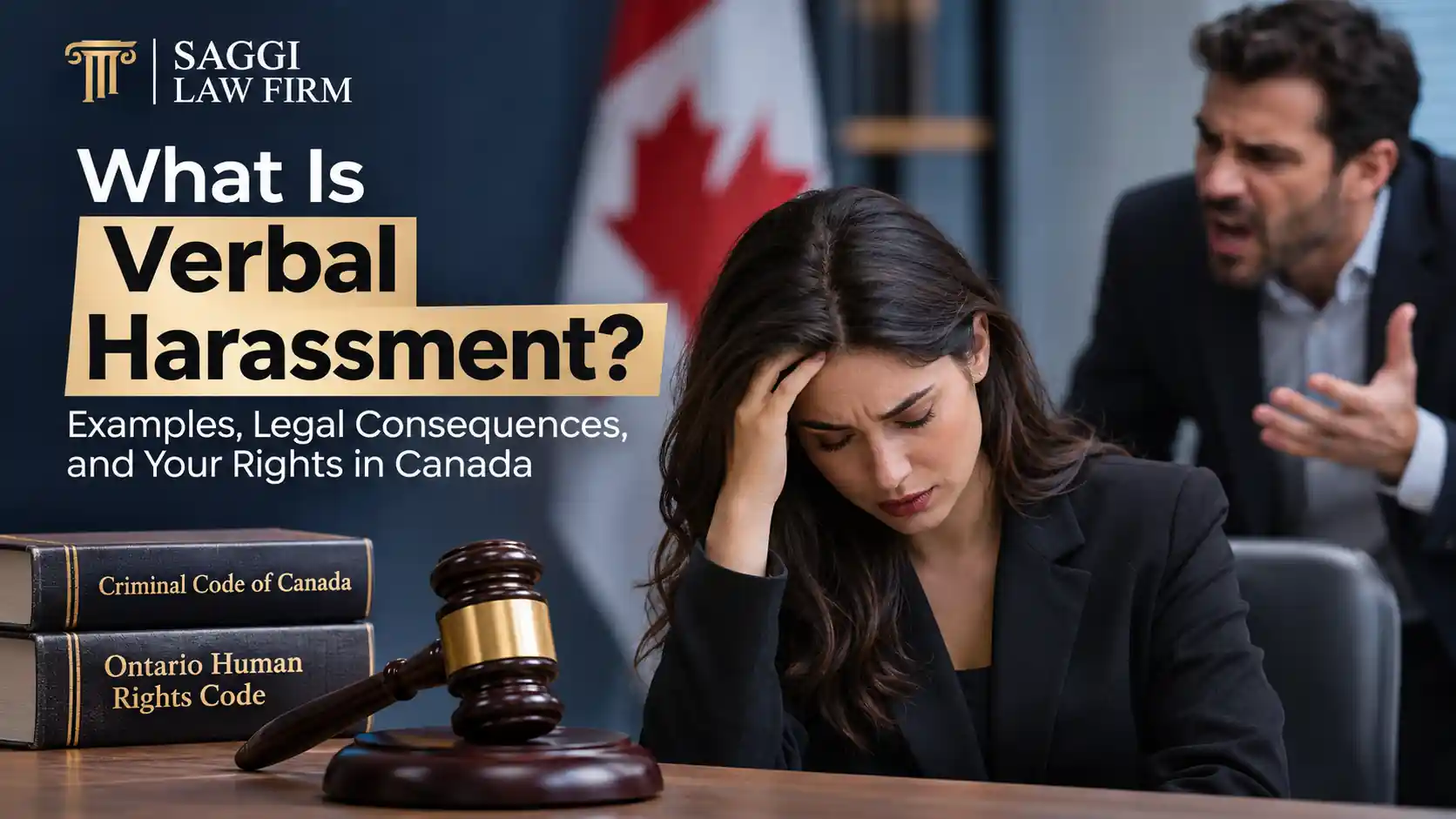
What Is Verbal Harassment? Examples, Legal Consequences, and Your Rights in Canada
Verbal harassment refers to the use of spoken or written words to intimidate, threaten, insult, humiliate, degrade, or repeatedly mistreat another person. It can involve abusive language, offensive comments, name-calling, yelling, shouting, screaming, swearing, profanity, threatening statements, and repeated insults intended to frighten, control, or emotionally harm someone.
Verbal harassment can happen in different environments, including workplaces, schools, public spaces, online platforms, and personal relationships. It may involve a stranger, colleague, employer, neighbour, family member, or intimate partner. Although a single disagreement or rude remark does not automatically constitute unlawful harassment, repeated unwanted comments, intimidation, discriminatory remarks, and serious threats may raise legal concerns.
In Canada, verbal harassment is not necessarily a standalone criminal offence. However, depending on the circumstances, the conduct may fall under criminal harassment, uttering threats, workplace harassment, discriminatory harassment, or other legal provisions.
Understanding what constitutes verbal harassment is important because victims may have legal options to protect themselves, report the behaviour, and seek appropriate remedies.
What Are the Common Examples of Verbal Harassment?
Verbal harassment can take several forms. Some behaviour is obvious, such as direct threats or aggressive shouting, while other conduct involves subtle but repeated humiliation, mockery, and belittling.
Common verbal harassment examples include:
Name-calling: Repeatedly using insulting or degrading names to embarrass someone.
Threatening statements: Saying something intended to make another person fear physical harm or other serious consequences.
Yelling and screaming: Frequently raising one’s voice to intimidate, frighten, or control someone.
Public humiliation: Insulting or ridiculing someone in front of colleagues, friends, or strangers.
Abusive language: Using profanity, offensive comments, or degrading expressions to attack another person’s dignity.
Discriminatory remarks: Making offensive statements about someone’s race, disability, sex, or another protected characteristic.
Repeated unwanted comments: Continuing to make insulting or intimidating remarks after being asked to stop.
Mockery and ridicule: Deliberately making someone the subject of jokes or humiliation.
Verbal intimidation: Using aggressive communication to create fear or pressure someone into complying.
The context, frequency, seriousness, and impact of the behaviour can help determine whether it amounts to unlawful harassment or another legally actionable form of misconduct.
What Are the Different Types of Verbal Harassment?
Verbal harassment can occur in personal, professional, and public environments. Recognising the different forms can help individuals understand their experiences and identify appropriate legal protections.
1. Workplace Verbal Harassment
Workplace verbal harassment occurs when an employee, supervisor, manager, or employer uses abusive or intimidating language towards another worker.
Examples include:
Repeatedly insulting an employee during meetings.
Shouting at workers to embarrass or intimidate them.
Making discriminatory or sexist comments.
Threatening an employee with unfair consequences.
Publicly humiliating someone in front of colleagues.
Repeatedly making offensive remarks about an individual’s background.
In Ontario, workplace harassment is addressed under the Occupational Health and Safety Act (OHSA). Employers have responsibilities to establish workplace harassment policies, develop reporting procedures, and investigate complaints as required by law.
2. Verbal Harassment in Relationships
Verbal harassment in relationships can involve repeated insults, humiliation, threats, controlling language, and aggressive communication between partners.
Domestic verbal abuse may include:
Constant criticism and belittling.
Threatening statements intended to create fear.
Repeated name-calling and humiliation.
Manipulative or degrading comments.
Using intimidating language to control a partner.
When this behaviour forms part of a broader pattern of psychological abuse, emotional abuse, or coercive control, it may have serious personal and legal implications.
3. Online Verbal Harassment and Cyberbullying
Online verbal harassment occurs through social media, messaging applications, emails, online forums, and other digital communication platforms.
Examples include abusive phone calls, threatening text messages, repeated offensive comments, cyberbullying, discriminatory remarks, and online intimidation.
Digital communication can also provide evidence of harassment, particularly when messages contain identifiable accounts, timestamps, and repeated unwanted contact.
4. Verbal Harassment in Public
Public verbal harassment involves insulting, threatening, intimidating, or humiliating someone in public spaces.
It may occur between neighbours, strangers, customers, or other individuals. Examples include repeated shouting, racial slurs, offensive comments, threatening behaviour, and aggressive confrontations.
Depending on the circumstances, serious conduct may involve criminal law considerations.
What Is the Difference Between Verbal Harassment and Verbal Abuse?
Although verbal harassment and verbal abuse are closely related, they are not always identical.
Verbal abuse generally refers to language used to insult, degrade, humiliate, or emotionally harm another person. It may include a single serious incident or an ongoing pattern of abusive communication.
Verbal harassment often involves repeated unwanted conduct, intimidation, offensive comments, or behaviour that creates a hostile or threatening environment.
For example, one insulting remark may be verbal abuse, but repeated discriminatory insults towards an employee may potentially constitute workplace or human rights harassment.
Verbal Harassment vs. Bullying
Bullying generally involves repeated aggressive or intimidating behaviour intended to undermine, frighten, or control another person. Verbal harassment can be one form of bullying, particularly when repeated insults, mockery, humiliation, and threats are involved.
Verbal Harassment vs. Verbal Threats
Verbal threats involve statements communicating an intention to cause harm or serious consequences. Not every insulting or aggressive statement is a criminal threat.
In Canada, the offence of uttering threats under section 264.1 of the Criminal Code may apply when someone knowingly conveys certain threats, including threats to cause death or bodily harm, subject to the legal requirements of the offence.
Is Verbal Harassment Illegal in Canada?
Verbal harassment can have legal consequences in Canada, but whether it is illegal depends on the nature of the behaviour, the circumstances, and the applicable legislation.
Several Canadian laws may apply to conduct involving threats, intimidation, repeated unwanted communication, or discriminatory harassment.
1. Criminal Code of Canada
The Criminal Code addresses certain forms of threatening and harassing behaviour.
Section 264 – Criminal Harassment
Criminal harassment may involve repeatedly communicating with someone, following them, watching their home or workplace, or engaging in threatening conduct. The behaviour must satisfy the legal requirements of the offence, including the required intent or knowledge and the reasonable fear for safety described in the provision.
Department of Justice Canada+1
Section 264.1 – Uttering Threats
This section makes it an offence to knowingly communicate threats to cause death or bodily harm, damage property, or kill, poison, or injure another person’s animal.
Department of Justice Canada+1
Section 372 – Harassing Communications
Repeated communications through telecommunications with the intent to harass someone, without lawful excuse, may constitute an offence under section 372(3).
Department of Justice Canada
Not every instance of verbal abuse qualifies as a criminal offence. The specific legal elements must be established.
2. Ontario Human Rights Code
The Ontario Human Rights Code protects individuals against harassment and discrimination in certain social areas, including employment and housing, when connected to protected grounds.
Examples may include racial slurs, sexist comments, discriminatory jokes, and repeated offensive remarks based on characteristics protected under the Code.
A pattern of unwelcome comments or conduct may constitute harassment. In certain circumstances, even a single serious incident may create a discriminatory poisoned environment.
Ontario Human Rights Commission+2
3. Ontario Occupational Health and Safety Act
Ontario’s Occupational Health and Safety Act (OHSA) establishes employer responsibilities concerning workplace harassment.
Employers must maintain workplace harassment policies and programs, provide reporting procedures, and ensure appropriate investigations into workplace harassment incidents and complaints.
Ontario+1
What Are the Effects of Verbal Harassment?
Verbal harassment can have significant emotional and psychological effects, particularly when the behaviour continues over an extended period.
Victims may experience:
Anxiety and ongoing emotional distress.
Loss of confidence and self-esteem.
Fear of interacting with the person responsible.
Depression and feelings of isolation.
Difficulty concentrating at work or school.
Sleep disturbances and increased stress.
Fear of public humiliation or further intimidation.
Emotional exhaustion and relationship difficulties.
In situations involving domestic verbal abuse or workplace harassment, repeated intimidation can affect a person’s sense of safety, personal relationships, and professional life.
These effects may also be relevant when documenting the impact of harassment for a workplace investigation or legal proceeding.
How Can You Prove Verbal Harassment?
Proving verbal harassment can be challenging because many incidents happen privately without independent witnesses. However, relevant documentation and supporting evidence can help establish what happened.
If you are experiencing verbal harassment, consider preserving the following:
1. Text Message Evidence
Save threatening text messages, emails, social media comments, and other written communications. Avoid deleting conversations that may establish a pattern of unwanted contact.
2. Witness Statements
If someone witnessed the harassment, their account may help support your complaint. Record the names and contact details of potential witnesses where appropriate.
3. Audio Recordings
Audio recordings may provide evidence of verbal threats or abusive communication. However, recording laws and privacy considerations can be complex, so obtain legal advice before recording or sharing conversations.
4. Documenting Verbal Abuse
Maintain a written record containing:
Date and time of each incident.
Location where the incident occurred.
Exact words or statements, as accurately as possible.
Identity of the person responsible.
Names of witnesses.
Any steps taken to report the behaviour.
How the incident affected you.
5. Police Reports and Workplace Complaints
Keep copies of police reports, workplace harassment complaints, investigation correspondence, and other relevant documents.
The more accurately you document the incidents, the easier it may be to explain the situation to a lawyer, investigator, or appropriate authority.
What Should You Do If Someone Verbally Harasses You?
If someone repeatedly insults, threatens, intimidates, or humiliates you, taking appropriate steps can help protect your safety and preserve potential evidence.
1. Set clear boundaries: If it is safe to do so, communicate that the comments or behaviour are unwelcome.
2. Avoid escalating confrontations: Responding with threats or aggressive behaviour may make the situation more complicated.
3. Preserve evidence: Keep relevant messages, emails, recordings obtained lawfully, and witness information.
4. Report the conduct: Depending on the circumstances, report workplace harassment to your employer or designated reporting person, discriminatory harassment through appropriate human rights channels, or threats and suspected criminal conduct to the police.
5. Consider protective measures: If you fear for your safety, seek immediate assistance. Depending on the circumstances, a peace bond or other court protection may be available.
6. Speak with a lawyer: A lawyer can assess the facts, explain your legal rights, and identify potential legal options.
Can You Get a Protection Order for Verbal Harassment?
Verbal harassment alone does not automatically qualify someone for a restraining order or protection order in Canada.
However, where harassment involves threats, repeated unwanted contact, intimidation, or a reasonable fear for personal safety, certain legal protections may be available.
Depending on the circumstances, possible options include:
Peace bond: Under section 810 of the Criminal Code, a person who reasonably fears that another individual will cause personal injury or damage property may seek a recognizance with appropriate conditions.
Restraining order: A restraining order may be available in certain family law situations, depending on the relationship and applicable legal requirements.
No-contact conditions: A court may impose restrictions on communication or contact as part of criminal proceedings or release conditions.
A lawyer can help determine which option is appropriate and whether the available evidence supports an application.
When Should You Contact a Verbal Harassment Lawyer?
You should consider speaking with a lawyer when verbal harassment involves serious threats, repeated intimidation, domestic abuse, discriminatory conduct, workplace mistreatment, or ongoing unwanted communication.
Legal advice may be particularly important when:
You have received threats of physical harm.
Someone repeatedly contacts or follows you despite requests to stop.
Your employer has failed to address a workplace harassment complaint.
You are experiencing racial, sexual, or discriminatory harassment.
You have been accused of verbal harassment and need to understand your legal rights.
You are facing criminal charges involving threats or harassment.
At Saggi Law Firm, individuals can seek legal guidance regarding harassment allegations, criminal law matters, workplace-related legal concerns, and available legal remedies.
Whether you are a victim seeking protection or someone facing an allegation of verbal harassment, understanding your legal position is essential. An experienced criminal defence lawyer can review the circumstances, explain applicable Canadian laws, assess the available evidence, and help you understand the next steps.
Frequently Asked Questions About Verbal Harassment
1. What is considered verbal harassment?
Verbal harassment generally involves unwelcome words or communication intended to intimidate, threaten, insult, humiliate, or degrade another person. Repeated offensive comments and threatening statements may also raise legal concerns.
2. Is verbal harassment a crime in Canada?
Verbal harassment is not automatically a criminal offence. However, conduct involving criminal harassment, uttering threats, or harassing telecommunications may be prosecuted under the Criminal Code if the required legal elements are established.
3. Can you report someone for verbal harassment?
Yes. Depending on the situation, you may report verbal harassment to the police, your employer, human resources department, or an appropriate human rights body.
4. Can verbal harassment happen through text messages?
Yes. Repeated abusive messages, threatening statements, offensive comments, and unwanted digital communications may constitute evidence of harassment. Certain repeated telecommunications intended to harass may also fall under section 372 of the Criminal Code.
5. Is yelling considered verbal abuse?
Yelling may constitute verbal abuse when used to intimidate, humiliate, threaten, or emotionally harm someone. However, an isolated raised voice does not automatically establish unlawful harassment.
6. Can you sue someone for verbal harassment?
Depending on the facts, there may be potential civil, employment, or human rights remedies. However, verbal harassment alone does not automatically create a right to sue. A lawyer can assess whether a recognised legal claim exists.
7. What is the difference between verbal harassment and emotional abuse?
Verbal harassment involves unwelcome verbal or written communication, such as insults, threats, and intimidation. Emotional abuse is broader and may involve manipulation, coercive control, humiliation, isolation, and repeated psychological mistreatment.
8. Can a single incident be considered verbal harassment?
Harassment generally involves a course of unwelcome conduct. However, under Ontario human rights law, a sufficiently serious single incident may create a poisoned environment and constitute discrimination.
Protect Your Rights Against Verbal Harassment
Experiencing verbal harassment can be distressing, especially when threats, intimidation, or repeated humiliation affect your personal life, workplace, or sense of safety. You do not have to navigate complicated legal questions without understanding your options.
Whether you need advice about reporting harassment, responding to criminal allegations, or exploring legal protection, Saggi Law Firm can help you understand the relevant legal considerations and potential next steps.
Contact Saggi Law Firm to discuss your circumstances and obtain legal guidance based on your situation.