★★★★★Affidavit Lawyer · Criminal Defence

Saggi Law Firm — Criminal Defence

Commissioner of Oaths Services in Ontario | Affidavits, Oaths & Declarations

When you need a commissioner of oaths in Ontario, having your affidavit, statutory declaration, or other legal document properly commissioned is important. A commissioner for taking affidavits can administer an oath or affirmation and take affidavits and declarations where permitted by law. At Saggi Law Firm, our commissioner of oaths services help individuals prepare for the commissioning of documents and understand the requirements involved in making a sworn statement.

Your document must be properly sworn, affirmed, and commissioned before it can serve its intended legal purpose.

Practicing Since2013
Availability24/7
ConsultationFree
Professional legal office scene illustrating Commissioner of Oaths Services in Ontario, featuring a client signing an affidavit while a commissioner oversees the document. The composition includes legal documents, an official stamp, books representing affidavits, oaths, and declarations, an Ontario flag, and a subtle Toronto skyline in the background. Clean, trustworthy, and professional visual suitable for a Canadian law firm website.

Understanding the Offence

What Sponsorship Letter Means Under Canadian Law

A sponsorship letter is generally a written document used to explain or support a person's relationship, financial support, accommodation, invitation, or other circumstances in an immigration or related administrative matter. However, Canadian law does not create a standalone criminal offence simply called a “sponsorship letter charge.” The legal consequences depend on the contents of the document, how it was prepared, and how it was used.

Where a sponsorship-related document is alleged to be deliberately false or forged, provisions of the Criminal Code may become relevant. For example, section 366 addresses forgery where a person knowingly makes a false document with the required intent, while section 368 addresses certain uses or dealings with documents known or believed to be forged.

A commissioner of oaths has a different role. In Ontario, a commissioner for taking affidavits can administer oaths and take affidavits, declarations, and affirmations where authorized. The commissioner does not generally guarantee that every factual statement contained in a document is true. The process involves administering the oath or affirmation and following the legal requirements for commissioning the document.

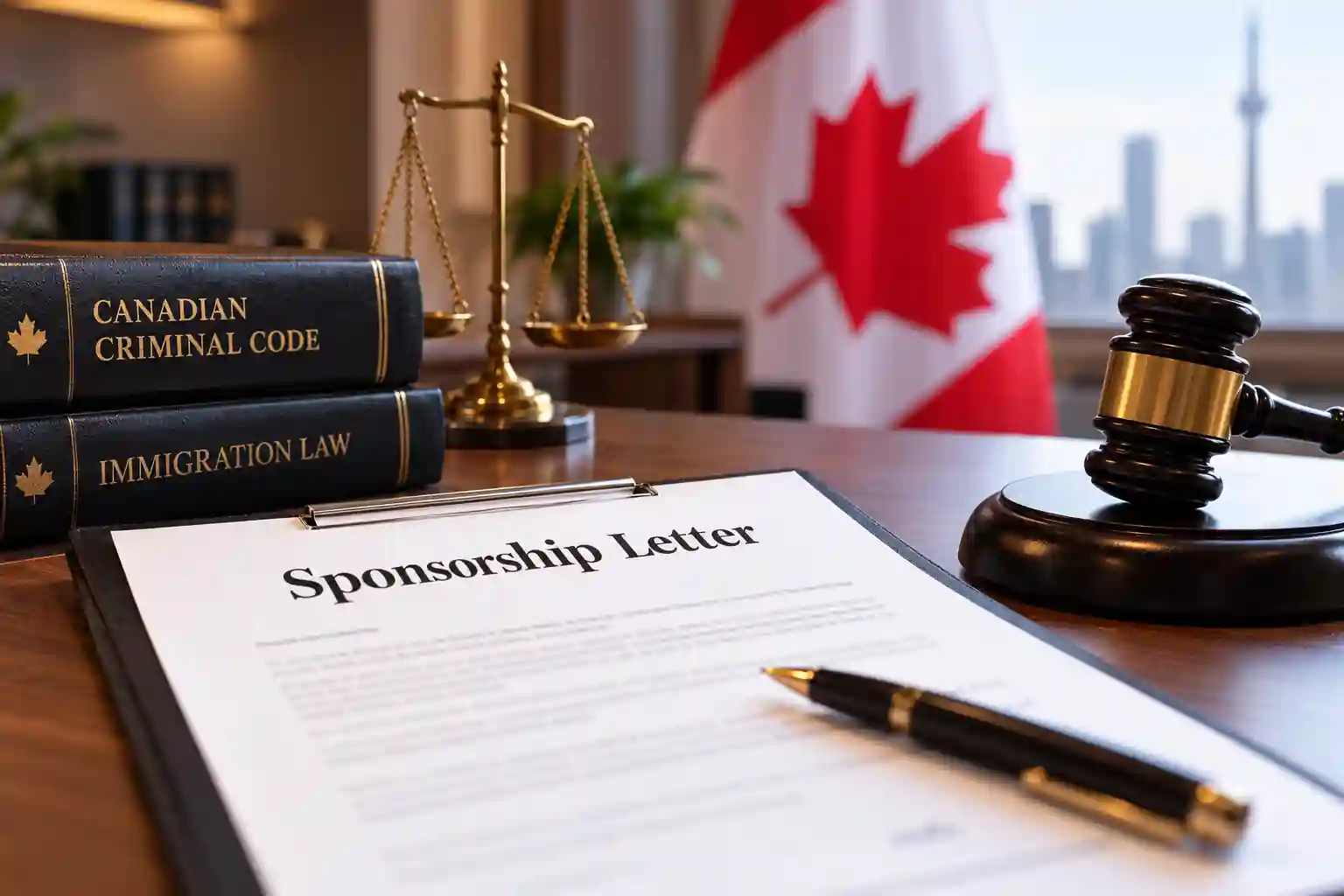
A professional legal-themed scene featuring a “Sponsorship Letter” document on a law office desk, alongside a gavel, scales of justice, Canadian legal books, and a Canadian flag in the background. The image represents the legal meaning and importance of sponsorship letters under Canadian law, with a formal and authoritative atmosphere suitable for a Canadian law firm website.

Affidavit Allegations

What a Sponsorship Letter Allegation Can Involve

A sponsorship letter allegation can involve questions about whether information in a document was accurate, whether a person knowingly submitted false information, whether a signature was genuine, or whether a document was altered or presented as authentic. The surrounding evidence and the person's actual knowledge and intention can therefore become important to the legal analysis.

A commissioner or notary may also become relevant where an affidavit or statutory declaration is part of the documentation. Ontario law requires a commissioner or other authorized person administering an oath or declaration to follow prescribed procedures, including addressing the genuineness of the signature and administering the oath or declaration as required by law.

Defence Approach

Assessing Knowledge and Intent

Not every inaccurate statement automatically establishes criminal liability. The circumstances surrounding how information was obtained, communicated, reviewed, and submitted can matter. We examine whether there is evidence supporting the required state of mind and whether the available evidence actually connects the accused to the alleged conduct.

Reviewing Commissioning Procedures

Where an affidavit, affirmation, or statutory declaration was commissioned, we review the circumstances surrounding the oath or affirmation. Ontario's rules place specific responsibilities on commissioners, including verifying the genuineness of the signature and administering the oath or declaration in the required manner.

Challenging the Prosecution's Evidence

We assess documents, communications, witness statements, electronic records, signatures, timelines, and other evidence relied upon by the prosecution. Where appropriate, inconsistencies or gaps may become relevant to the defence. The objective is to ensure that the case is assessed according to the actual evidence and the legal requirements of the charge.

Saggi Law Firm office in Brampton, Ontario
★Est. 2013 · Brampton, ON

“A direct 24/7 line, personal attention, and a strategy built around your case — not a template.”

— Mandeep Saggi

Building the Defence

Building an Effective Defence Strategy

A meaningful defence strategy begins with the precise allegation rather than assumptions about what a particular document means. We examine the legal charge, the evidence, the document's history, and the circumstances in which any oath, affirmation, declaration, or submission occurred.

  • Document history — whether the document's preparation, signing, and submission can be established through reliable evidence.
  • Knowledge and intention — whether the evidence establishes that the accused knew the document was false and possessed the legally required intent.
  • Commissioning process — whether the oath, affirmation, affidavit, or declaration was administered according to the applicable requirements.
  • Evidence reliability — whether witness testimony, records, signatures, communications, and other evidence consistently support the allegation.


Meet the Lawyer

Meet the Lawyer

Your legal matter deserves personal attention from a qualified legal professional. Mandeep Saggi represents clients through Saggi Law Firm in serious criminal matters and provides focused criminal defence representation.

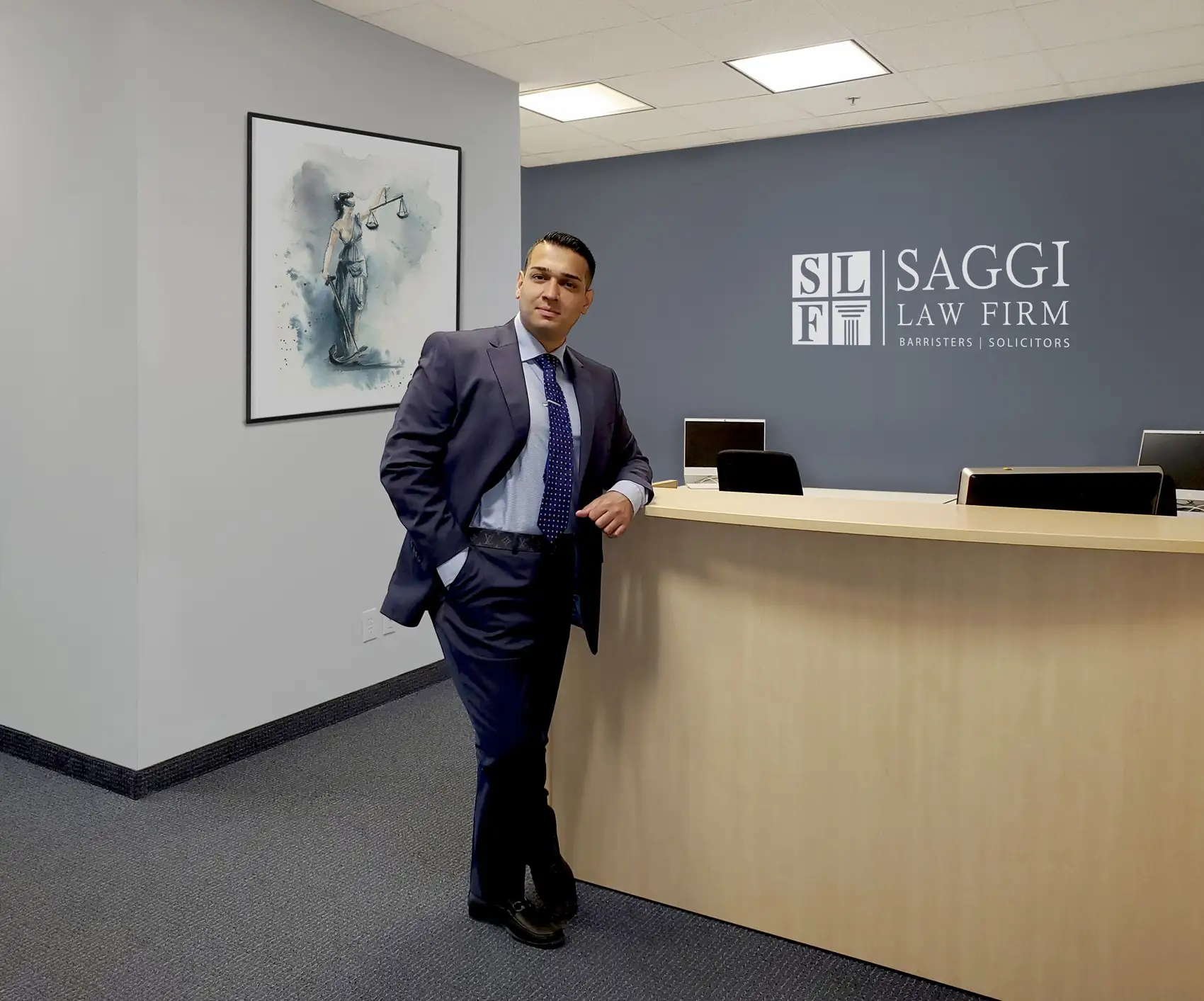
Mandeep Saggi, Criminal Defence Lawyer at Saggi Law Firm in Brampton, serving Toronto and the GTA
★★★★★ Top-Rated in Brampton

Barrister & Solicitor

Mandeep Saggi

Criminal Defence Lawyer

Strategy. Advocacy. Experience.

“Since 2013, Mandeep Saggi has built a reputation as a criminal defence lawyer in Brampton who vigorously fights for his clients' rights.”

He has successfully defended clients against criminal cases in the Ontario Court of Justice and the Superior Court of Justice, and makes daily appearances at the Brampton Courthouse.

Mandeep has been involved in high-profile criminal cases and represents clients in matters ranging from smaller-scale to complex criminal charges. Known for speedy responses, he keeps a direct line available 24/7.

§

Called to the Ontario Bar

Law Society of Ontario — 2013

§

Bachelor of Laws (LL.B Hons.)

University of Leicester, UK — 2009

§

Bachelor of Arts (B.A.)

York University — 2007

§

Articling

Toronto criminal law firm

§

Languages

English, Portuguese, Spanish, Punjabi, Hindi, Urdu

★Rated in the top 3 by Three Best Rated® — Best Criminal Defence Lawyers in Brampton

Protect Your Rights

Protect Your Rights in a Sponsorship Letter Case

If you are facing questions about a sponsorship letter, affidavit, statutory declaration, or another document, obtaining legal advice early can help you understand the allegation and the process ahead. A commissioner of oaths can perform a specific legal function, but commissioning a document does not replace legal advice concerning potential criminal allegations.

Our criminal defence lawyer can assist with matters such as:

  • Reviewing sponsorship-related allegations
  • Examining affidavits and statutory declarations
  • Reviewing allegedly false or altered documents
  • Assessing allegations involving forged documents
  • Reviewing evidence concerning signatures
  • Examining communications and supporting records
  • Advising on police investigations
  • Reviewing potential Criminal Code charges
  • Preparing for court proceedings
  • Explaining available defence options

Where an affidavit or declaration is required, Ontario recognizes commissioners for taking affidavits as authorized persons who can administer oaths and take affidavits and declarations within the scope of their authority.

What Happens After You Are Charged?

If you are charged with a criminal offence arising from an allegedly false, altered, or forged document, the next steps depend on the specific charge and circumstances. The process can involve disclosure, court appearances, legal motions, negotiations, and potentially a trial. The prosecution must establish the required elements of the offence according to the applicable legal standard.

For example, section 367 provides the punishment provision for forgery under section 366, while section 368 addresses certain conduct involving forged documents. The precise charge and mode of proceeding should therefore be reviewed rather than assuming that every disputed sponsorship letter constitutes forgery.

After You Are Charged

Why Early Legal Representation Matters

Early legal representation gives you an opportunity to understand what the allegation actually concerns before making decisions that could affect the case. Documents, messages, emails, applications, signatures, and other records may become important evidence, making it useful to preserve relevant information and obtain advice promptly.

Legal representation can also help distinguish between an administrative document issue and an allegation that potentially engages the Criminal Code. A commissioner of oaths, notary public, or lawyer may perform different functions, and understanding those distinctions can be important when reviewing a document-related matter. Ontario states that a notary public has the powers of a commissioner for taking affidavits and additional powers concerning signatures, marks, and copies of documents.

Why Early Legal Representation Matters

Long-Term Consequences

A criminal allegation involving a document can have consequences beyond the immediate court process. Depending on the charge and outcome, there may be implications for employment, immigration matters, professional obligations, travel, reputation, or future legal proceedings.

For that reason, it is important to understand the potential consequences of the particular allegation rather than relying on general assumptions. The significance of an allegation depends on the applicable law, the evidence, and the eventual outcome.

Individual Defence Strategy

Every document-related case has different facts. One matter may concern an allegedly altered document, while another may involve questions about authorship, knowledge, signature, or how information was communicated to another person.

A tailored strategy considers the actual evidence and the elements of the charge. Saggi Law Firm can review the circumstances and explain the legal issues that may apply to your situation.

Empty Canadian courtroom where criminal trials and bail hearings take place

Criminal Justice Process

Understanding the Criminal Justice Process

The Canadian criminal justice process can begin with an investigation, followed by an arrest or charge depending on the circumstances. Once a person is charged, the case may proceed through court appearances and disclosure, allowing the defence to understand the evidence relied upon by the prosecution.

The defence may then assess the strength of the case, identify legal and evidentiary issues, and determine the appropriate next steps. Depending on the circumstances, this can include negotiations, applications, preliminary proceedings where applicable, or preparation for trial.

For document-related allegations, the underlying document can be particularly important. Section 366 of the Criminal Code defines forgery in terms that include making a false document knowingly with specified intent, while section 368 addresses particular conduct involving a document known or believed to be forged.

Frequently Asked Questions

Frequently Asked Questions About Sponsorship Letter Charges

If you are dealing with a sponsorship letter, affidavit, declaration, or document-related allegation, the following answers provide general information. The precise legal position depends on the facts and the charge.

Is a sponsorship letter itself a criminal offence?

No. A sponsorship letter is not, by itself, a standalone Criminal Code offence. Legal consequences may arise depending on whether the document allegedly contains deliberate falsehoods, was forged, altered, or knowingly used as a forged document. The applicable Criminal Code section and evidence must therefore be examined in each individual case.

What does a commissioner of oaths do?

A commissioner for taking affidavits can administer oaths or affirmations and take affidavits, declarations, and other documents where legally authorized. Ontario explains that commissioners have specific responsibilities when administering an oath or declaration, including addressing the genuineness of the person's signature and following the required procedure.

Is a commissioner of oaths the same as a notary public?

They are not identical roles. In Ontario, a notary public has the powers of a commissioner for taking affidavits and can also verify signatures, marks, and copies of documents as true or genuine. Whether you need a commissioner or notary depends on the document's legal purpose and the authority required.

Can a commissioner certify a true copy?

A commissioner of oaths does not automatically have every power associated with a notary public. Ontario specifically states that a notary public can verify that signatures, marks, and copies of documents are true or genuine. Therefore, you should determine whether the document requires commissioning, notarization, or another form of certification.

Can affidavits be commissioned remotely in Ontario?

Ontario legislation allows remote administration of an oath or declaration when the applicable regulatory conditions are satisfied. The current remote-administration regulations require an electronic communication method that allows participants to see, hear, and communicate with one another in real time throughout the transaction.

Do I need a commissioner for a statutory declaration?

It depends on the particular statutory declaration and the law or organization requiring it. A statutory declaration is a solemn declaration concerning facts or an account in writing. Ontario law provides for commissioners to take declarations where declarations may be taken or required under an applicable Act.

Can a commissioner of oaths take an affidavit?

Yes, where the commissioner is authorized to do so. Ontario describes commissioners for taking affidavits as persons who can administer oaths and take affidavits, declarations, and affirmations within the scope of their authority. Specific limitations may apply depending on the appointment and governing requirements.

What should I do if a document is alleged to be forged?

Do not assume that an allegation automatically establishes criminal liability. Preserve relevant documents and communications, avoid altering potentially relevant evidence, and obtain legal advice promptly. The applicable Criminal Code provision may depend on whether the allegation concerns making, using, possessing, or otherwise dealing with an allegedly forged document.

Visit Our Office

Saggi Law Firm — Brampton, ON

Located at Springdale Village Centre in Brampton. Available 24/7 for urgent legal matters — call, WhatsApp, or drop by the office.

Contact Us

Speak With Saggi Law Firm About Your Sponsorship Letter Case

If you need a commissioner of oaths in Ontario, assistance with an affidavit or statutory declaration, or legal advice concerning an allegation involving a sponsorship-related document, Saggi Law Firm can help you understand the issues involved. Ontario recognizes commissioners for taking affidavits as authorized persons who can administer oaths and take affidavits and declarations, subject to the applicable legal requirements and limitations.

Where a document has become part of a criminal allegation, it is important to separate the administrative function of commissioning a document from the legal questions surrounding its contents, preparation, use, and alleged falsity. Our approach is focused on the evidence, the applicable law, and the individual circumstances of your matter.

Contact Saggi Law Firm to discuss your document, affidavit, commissioner of oaths, or sponsorship-related legal matter.

+1 647-983-6720