★★★★★Affidavit Lawyer · Criminal Defence

Saggi Law Firm — Criminal Defence

Affidavit Lawyer Toronto | Affidavit Preparation, Swearing & Notary Services

An affidavit is a formal written statement of facts that a person confirms to be true by oath or affirmation. Affidavits can be used in court proceedings, family law matters, civil disputes, administrative proceedings, and other legal matters where sworn evidence is required. Saggi Law Firm provides legal guidance for preparing an affidavit, reviewing its contents, and arranging for the document to be properly sworn or affirmed before an authorized person.

Need an affidavit in Ontario? Proper preparation, signing, and commissioning can matter to whether your document is accepted for its intended legal purpose.

Practicing Since2013
Availability24/7
ConsultationFree

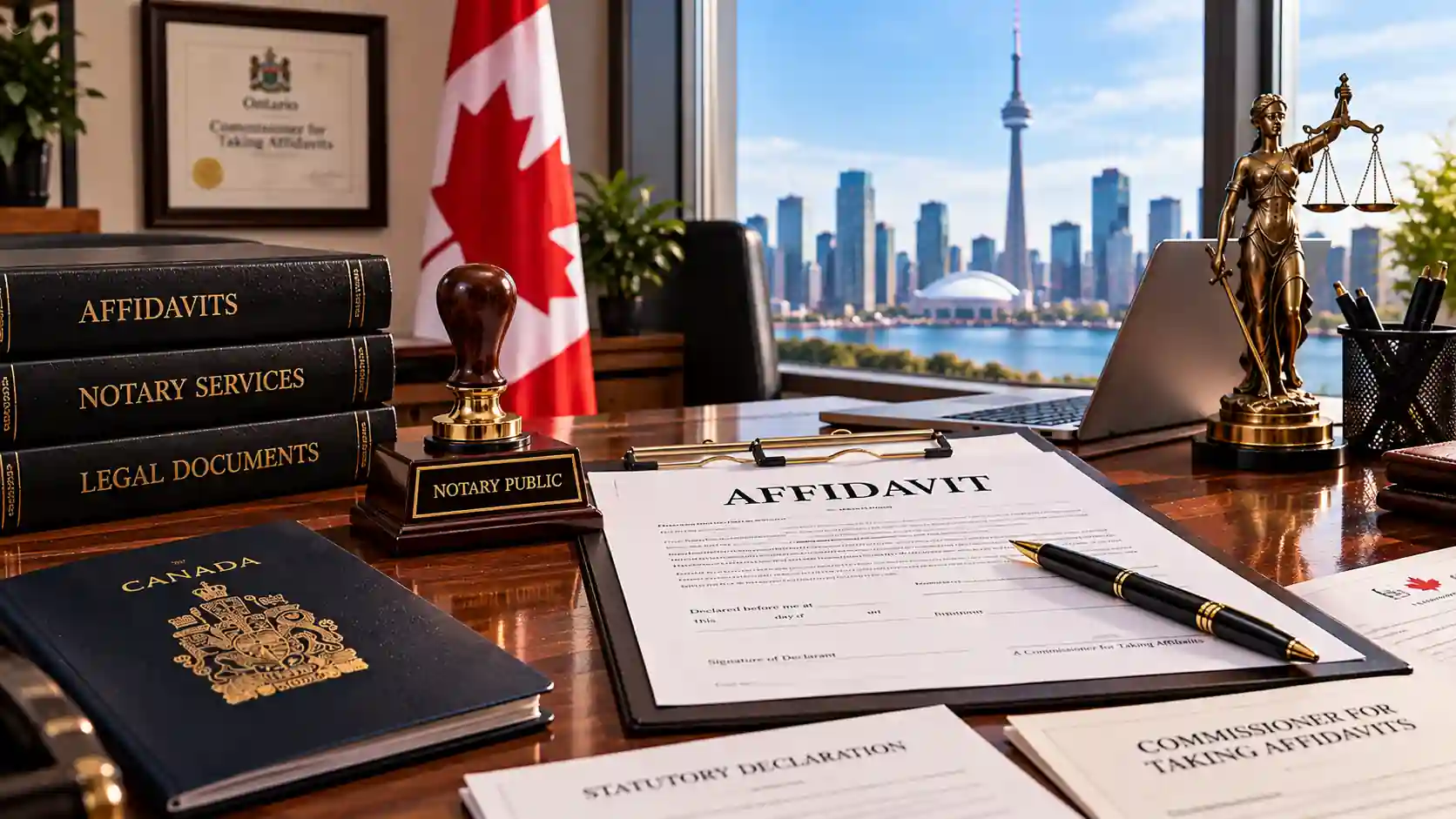
A professional, photorealistic Toronto legal office scene centered on affidavit preparation and notary services. A completed Affidavit document rests prominently on a polished wooden desk beside a notary seal, pen, Canadian passport, statutory declaration paperwork, and legal reference books, while a Canadian flag, Lady Justice statue, and Ontario commissioning certificate reinforce the legal setting. The Toronto skyline and CN Tower are visible through the window, with warm natural lighting creating a trustworthy and formal atmosphere suitable for an Affidavit Lawyer Toronto | Affidavit Preparation, Swearing & Notary Services webpage.

Overview

What an Affidavit Means Under Canadian Law

An affidavit is a written statement confirmed by oath or affirmation and is often used as evidence in court. In Ontario, the Rules of Civil Procedure generally require an affidavit used in a proceeding to be in the prescribed form, written in the first person, identify the deponent, use consecutively numbered paragraphs, and be signed and sworn or affirmed before an authorized person.

There is no single Criminal Code section that defines an affidavit because an affidavit is a legal document rather than a criminal charge. Depending on the matter, different legislation and court rules may apply. Ontario's Commissioners for Taking Affidavits Act addresses the administration of oaths and declarations, while Ontario's civil procedure rules establish requirements for affidavits used in civil proceedings.

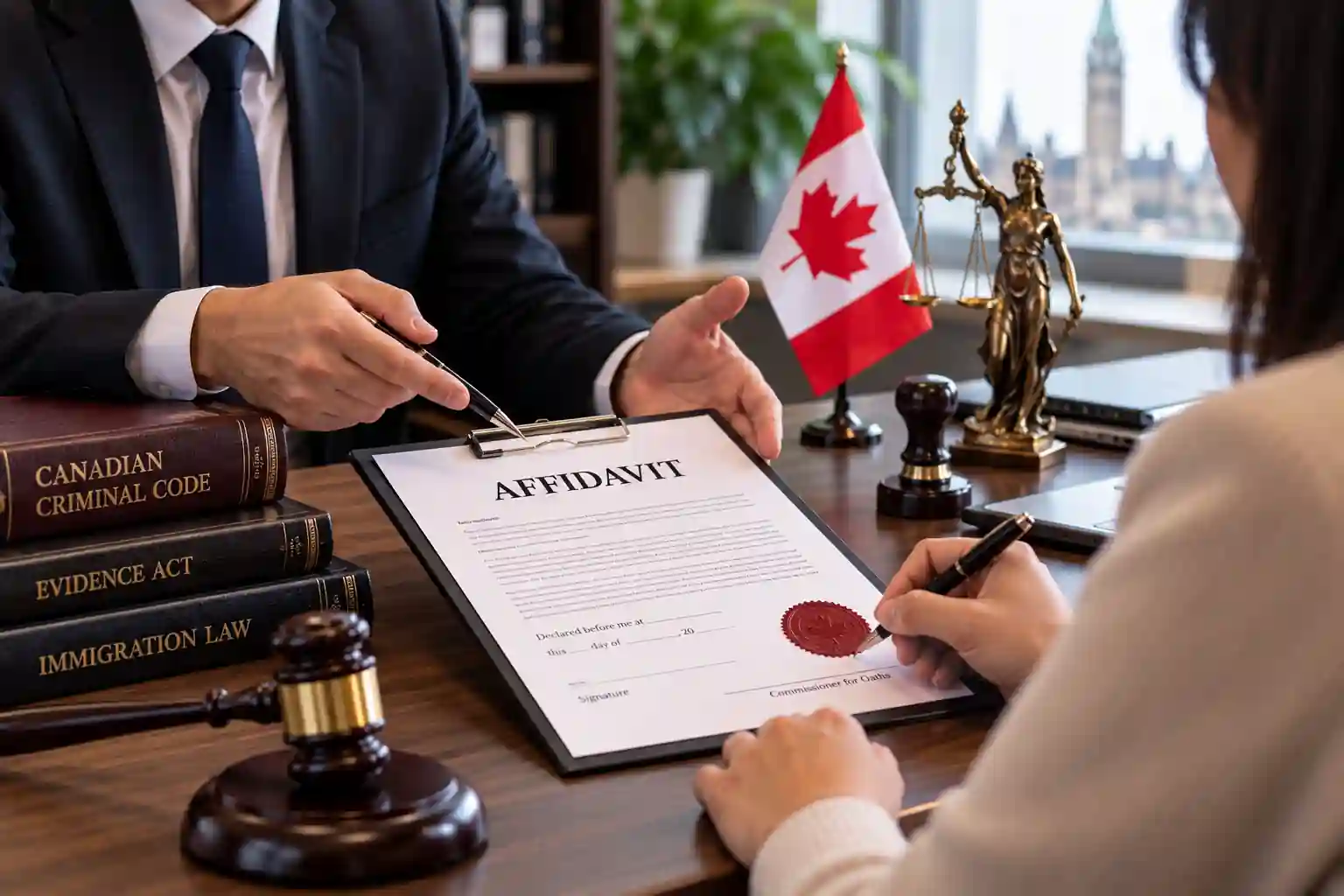
A professional Canadian legal setting showing a lawyer assisting a client with signing an affidavit. The document, commissioner for oaths details, Canadian flag, legal books, gavel, and scales of justice reinforce the formal legal nature of an affidavit and its role as a sworn written statement under Canadian law.

What It Involves

What an Affidavit Can Involve

The contents of an affidavit depend on the legal matter and the purpose for which it is being prepared. An affidavit may contain a person's statement of facts based on personal knowledge, explanations of relevant events, references to documents, or information that the court is permitted to receive through affidavit evidence. Ontario's Rules of Civil Procedure generally require affidavit contents to be confined to facts within the deponent's personal knowledge or evidence the person could give as a witness, subject to applicable exceptions.

Affidavits can arise in family law, civil litigation, property matters, estate matters, administrative proceedings, and other legal situations. Exhibits referred to in an affidavit may also need to be properly marked and attached or otherwise handled according to the applicable rules. A document that simply looks like an affidavit may not satisfy the requirements of the court or organization receiving it.

How We Help

Preparing a Clear Statement of Facts

An affidavit should communicate relevant facts clearly and logically. We can assist with organizing the body of the affidavit, identifying information that may be relevant, and ensuring that the statement is presented in an appropriate format. Where court rules apply, the contents should generally focus on facts that are within the deponent's personal knowledge.

Reviewing Supporting Documents and Exhibits

Documents referenced in an affidavit may need to be identified and marked as exhibits. Ontario's Rules of Civil Procedure contain specific requirements concerning exhibits referred to in affidavits. We can help review the supporting material and identify whether documents should be included, attached, or otherwise addressed as part of the affidavit process.

Swearing or Affirming the Affidavit

An affidavit must generally be sworn or affirmed before someone authorized to administer the oath or affirmation. Ontario states that notaries public and commissioners for taking affidavits can administer oaths or affirmations, and Ontario lawyers and paralegals are automatically commissioners for taking affidavits. We can assist with the commissioning process and help ensure the document is properly completed.

Saggi Law Firm office in Brampton, Ontario
★Est. 2013 · Brampton, ON

“A direct 24/7 line, personal attention, and a strategy built around your case — not a template.”

— Mandeep Saggi

Our Approach

Building an Effective Affidavit Strategy

A strong affidavit is more than a collection of facts. It should be relevant to the legal issue, organized so the reader can follow the chronology, and consistent with the documents and evidence that accompany it. Where an affidavit is intended for court, the applicable procedural rules should be considered before signing the document.

  • Purpose — whether the affidavit clearly addresses the legal purpose for which it is being prepared.
  • Personal Knowledge — whether the statements are based on facts the deponent personally knows or evidence the applicable rules permit.
  • Supporting Evidence — whether referenced documents and exhibits are properly identified and handled under the applicable requirements.
  • Formal Requirements — whether the affidavit has been properly signed, sworn or affirmed, commissioned, and prepared in the required format.

Meet the Lawyer

Meet the Lawyer

Your legal matter deserves personal attention from a qualified legal professional. Mandeep Saggi represents clients through Saggi Law Firm in serious criminal matters and provides focused criminal defence representation.

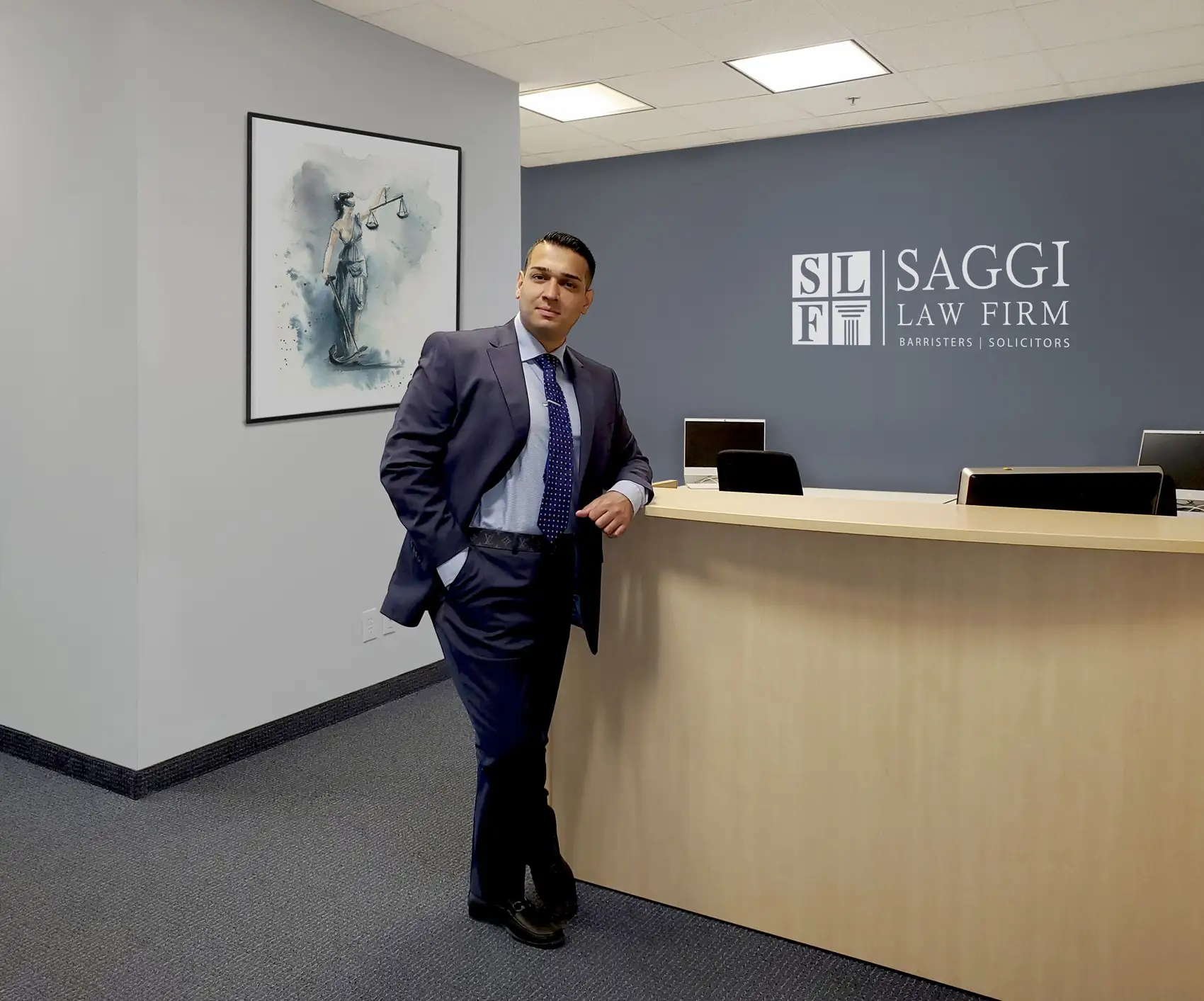
Mandeep Saggi, Criminal Defence Lawyer at Saggi Law Firm in Brampton, serving Toronto and the GTA
★★★★★ Top-Rated in Brampton

Barrister & Solicitor

Mandeep Saggi

Criminal Defence Lawyer

Strategy. Advocacy. Experience.

“Since 2013, Mandeep Saggi has built a reputation as a criminal defence lawyer in Brampton who vigorously fights for his clients' rights.”

He has successfully defended clients against criminal cases in the Ontario Court of Justice and the Superior Court of Justice, and makes daily appearances at the Brampton Courthouse.

Mandeep has been involved in high-profile criminal cases and represents clients in matters ranging from smaller-scale to complex criminal charges. Known for speedy responses, he keeps a direct line available 24/7.

§

Called to the Ontario Bar

Law Society of Ontario — 2013

§

Bachelor of Laws (LL.B Hons.)

University of Leicester, UK — 2009

§

Bachelor of Arts (B.A.)

York University — 2007

§

Articling

Toronto criminal law firm

§

Languages

English, Portuguese, Spanish, Punjabi, Hindi, Urdu

★Rated in the top 3 by Three Best Rated® — Best Criminal Defence Lawyers in Brampton

Your Rights and Options

Protect Your Rights in an Affidavit Case

Signing an affidavit can have legal significance because the person making it is formally confirming the truth of its contents through an oath or affirmation. Ontario describes an affidavit as a written statement confirmed to be true by oath or affirmation, often used as evidence in court.

Our legal team can assist with matters such as:

  • Preparing an affidavit for court proceedings
  • Reviewing an existing affidavit
  • Swearing or affirming an affidavit
  • Commissioner of oaths services
  • Notary public services
  • Affidavits of service
  • Family law affidavits
  • Civil litigation affidavits
  • Supporting documents and affidavit exhibits
  • Legal advice concerning affidavit requirements

What to Expect

What Happens After You Prepare an Affidavit?

After the contents of an affidavit have been prepared and reviewed, the deponent generally signs and swears or affirms the document before an authorized commissioner, notary public, or other person permitted to administer the oath. The person administering the oath must follow the applicable legal requirements and complete the jurat or declaration.

If the affidavit is being used in court, additional steps may include filing, service on other parties, and attaching or providing exhibits according to the applicable court rules. The exact procedure depends on the type of proceeding and the court involved. Preparing an affidavit does not automatically mean it has been filed or accepted by a court.

Why Early Legal Representation Matters

Obtaining legal advice before signing an affidavit can be useful when the document is intended to support an important legal application or court proceeding. Once sworn or affirmed, the contents become a formal statement, so it is important to understand what the document says and whether it accurately reflects the facts you personally know.

Early review can also help identify problems with organization, relevance, supporting evidence, or procedural requirements. Ontario's civil rules, for example, require affidavits used in proceedings to follow particular formatting and content requirements.

Why It Matters

Long-Term Consequences

An affidavit may become part of the evidentiary record in a legal proceeding. Statements made in a sworn affidavit can therefore have consequences beyond the moment of signing, particularly when the document is relied upon by a court or another decision-maker.

For that reason, a person should carefully review the contents of an affidavit before making the required oath or affirmation. If an important statement is inaccurate or unclear, obtaining legal advice before signing may help address the issue.

Individual Defence Strategy

There is no universal affidavit template that works for every legal matter. The appropriate contents depend on the proceeding, the issues being addressed, the evidence available, and the requirements of the organization or court receiving the document.

Saggi Law Firm can help determine what type of affidavit or sworn statement may be appropriate and assist with preparing the document according to the circumstances of the matter.

Empty Canadian courtroom where criminal trials and bail hearings take place

The Process

Understanding the Legal Process

The affidavit process normally begins by identifying why the document is required and determining what facts need to be included. The deponent should distinguish between information personally known to them and information obtained from other sources, particularly where the affidavit is intended to be used as evidence.

The document is then prepared in an appropriate format. In Ontario civil proceedings, Rule 4.06 requires an affidavit to be in Form 4D, expressed in the first person, identify the deponent, use numbered paragraphs, and be signed and sworn or affirmed before an authorized person.

The final stage involves properly administering the oath or affirmation and completing the jurat or declaration. Ontario's guidance explains that the person administering the affidavit must verify the genuineness of the signature and administer the oath or declaration in the legally required manner. Depending on the matter, the completed affidavit may then be filed, served, or submitted to the relevant authority.

Frequently Asked Questions

Frequently Asked Questions About Affidavit Charges

An affidavit is a formal legal document, but it is not itself a criminal charge. The following questions address common concerns about preparing, swearing, commissioning, and using affidavits in Ontario.

What is an affidavit?

An affidavit is a written statement of facts that a person confirms to be true through an oath or affirmation. It is often used as evidence in court proceedings. The person making the affidavit is called the deponent. Depending on the proceeding, specific rules may govern its format, contents, signing, exhibits, filing, and service.

Do I need a lawyer to prepare an affidavit?

You do not necessarily need a lawyer simply to prepare or swear an affidavit. However, legal advice can be valuable when the affidavit will be used in important court proceedings. A lawyer can help organize relevant facts, identify potential issues, review supporting documents, and consider the procedural requirements that apply to your particular matter.

Where can I swear an affidavit in Ontario?

Ontario affidavits can generally be sworn or affirmed before an authorized person such as a commissioner for taking affidavits or a notary public. Ontario also notes that lawyers and paralegals are automatically commissioners for taking affidavits. The appropriate location and person may depend on the purpose of the document.

What is the difference between a notary and a commissioner?

A commissioner for taking affidavits can administer oaths and take affidavits, declarations, and affirmations. A notary public in Ontario has the powers of a commissioner for taking affidavits and can also perform certain additional functions, including verifying signatures, marks, and copies of documents.

Can I sign an affidavit before meeting the commissioner?

The affidavit process generally requires the deponent to sign and swear or affirm the document in accordance with applicable legal requirements. The commissioner or notary must satisfy themselves about the genuineness of the signature and properly administer the oath or declaration before completing the jurat.

What information should an affidavit contain?

The contents depend on the purpose of the affidavit and the applicable rules. In Ontario civil proceedings, affidavits should generally contain facts within the deponent's personal knowledge or other evidence permitted by the rules. The affidavit should identify the deponent, use numbered paragraphs, and address relevant facts clearly.

Can I use an affidavit template?

A template can help with basic structure, but it should be adapted to the specific legal matter. Court forms and procedural rules may impose particular requirements, and the contents should accurately reflect the deponent's own circumstances. A generic template should not be treated as a substitute for legal advice when the affidavit is legally significant.

Can Saggi Law Firm notarize or commission my affidavit?

Saggi Law Firm can assist with affidavit preparation, legal review, commissioning, and related notary services, subject to the particular requirements of the matter. If you already have an affidavit prepared, the appropriate process may simply involve having it properly sworn or affirmed. If you need an affidavit drafted, legal review may also be appropriate.

Visit Our Office

Saggi Law Firm — Brampton, ON

Located at Springdale Village Centre in Brampton. Available 24/7 for urgent legal matters — call, WhatsApp, or drop by the office.

Contact Us

Speak With Saggi Law Firm About Your Affidavit Case

Whether you need an affidavit for family law, civil litigation, an affidavit of service, another court proceeding, or a legal or administrative matter, the document should be prepared and completed with its intended purpose in mind. Saggi Law Firm can provide legal guidance on preparing an affidavit, reviewing its contents, and arranging for the required oath, affirmation, or commissioning.

If you are unsure whether you need an affidavit, need help preparing the body of the document, or want to get your affidavit notarized or commissioned in Ontario, professional assistance can help you understand the appropriate process and documentation.

Contact Saggi Law Firm today to discuss your affidavit, notary, or commissioning needs in Ontario.

+1 647-983-6720