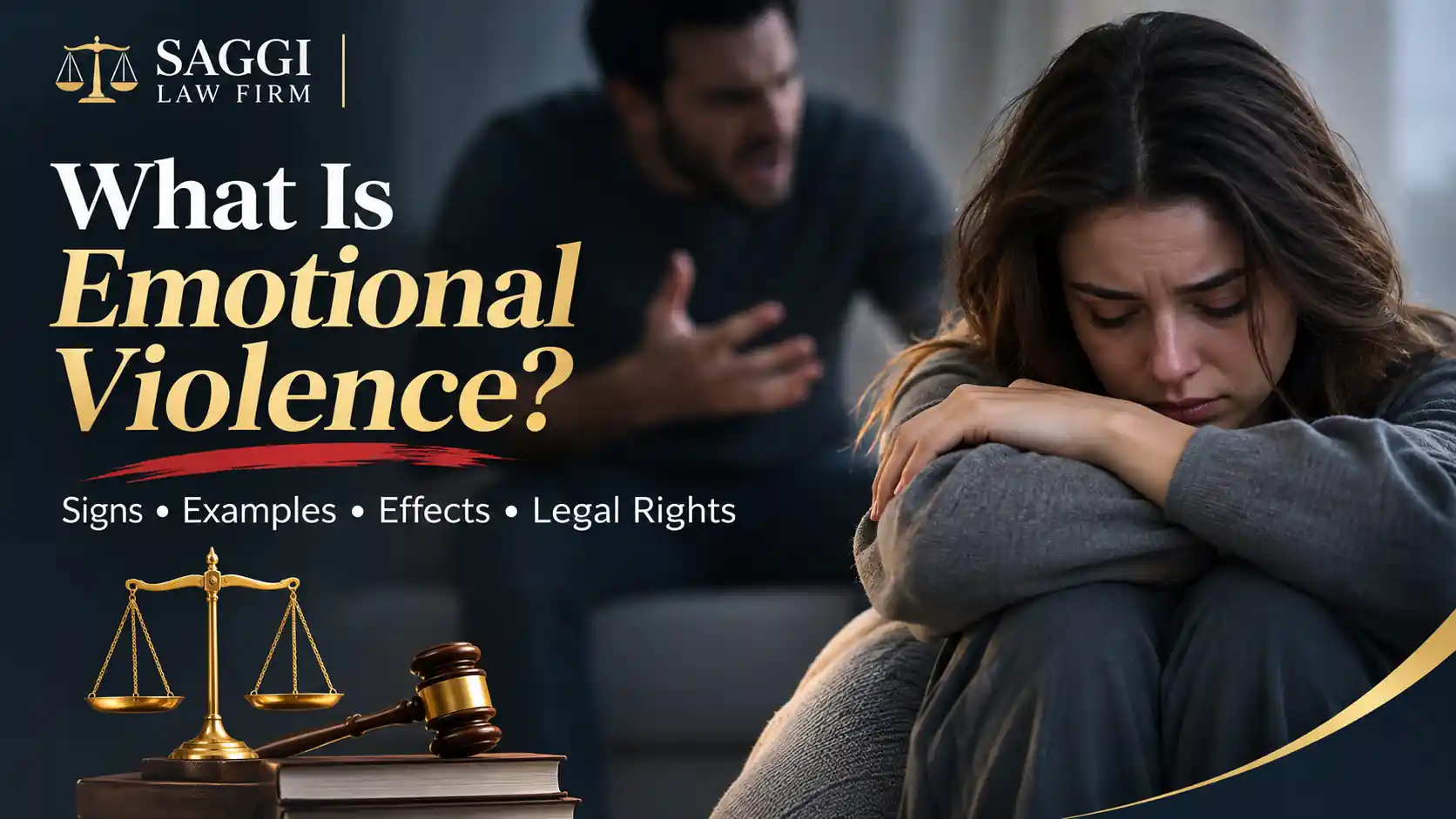
What Is Emotional Violence? Signs, Examples, Effects, and Legal Rights in Canada
Emotional violence is a form of abuse in which one person repeatedly uses words, actions, threats, manipulation, intimidation, or controlling behaviour to harm another person’s emotional and psychological well-being. Unlike physical violence, emotional violence does not necessarily involve hitting, pushing, or causing visible injuries. Instead, it creates fear, humiliation, anxiety, low self-esteem, and emotional distress through repeated patterns of harmful behaviour.
Also known as emotional abuse or psychological abuse, emotional violence can occur in marriages, intimate relationships, families, workplaces, and other personal or professional environments. It may involve gaslighting, constant criticism, emotional blackmail, isolation, verbal abuse, and attempts to control another person’s decisions.
Understanding what emotional violence means is important because its effects can be serious and long-lasting. Victims may experience emotional trauma, depression, psychological distress, and difficulty maintaining healthy relationships.
In Canada, emotional violence may also have legal implications depending on the circumstances. Although emotional abuse is not automatically a separate criminal offence, certain behaviours associated with it may fall under existing criminal laws or family law protections. Understanding your legal rights can help you determine what steps to take when experiencing abusive behaviour.
What Are the Common Signs of Emotional Violence?
Emotional violence is not always easy to recognize, particularly when abusive behaviour develops gradually. An abusive person may initially appear caring or protective before using manipulation and controlling behaviour to gain power over someone.
Recognizing the warning signs of emotional violence can help victims understand whether their relationship has become unhealthy or abusive.
1. Gaslighting and Emotional Manipulation
Gaslighting is a form of psychological manipulation in which someone repeatedly makes another person question their memory, feelings, experiences, or understanding of reality.
Examples include:
Denying things they previously said or did.
Making someone believe their feelings are unreasonable.
Blaming the victim for problems they did not cause.
Suggesting that the victim is imagining events.
Manipulating situations to avoid responsibility.
Over time, gaslighting can cause confusion, self-doubt, and a loss of confidence.
2. Constant Criticism and Humiliation
Repeated insults, name-calling, degradation, and public shaming can be forms of emotional abuse.
An abusive person may regularly criticize someone’s appearance, intelligence, decisions, abilities, or personality. These actions can gradually damage self-esteem and create feelings of worthlessness.
3. Controlling Behaviour and Isolation
Controlling behaviour is another significant warning sign. It may involve restricting someone’s freedom, monitoring their communications, controlling finances, or preventing them from maintaining relationships with friends and family.
Examples include:
Controlling access to money or financial resources.
Monitoring phone calls, messages, or social media.
Preventing contact with family members.
Making decisions without considering the other person’s wishes.
Using jealousy and possessiveness to justify restrictions.
When these behaviours form a pattern of domination, they may be associated with coercive control.
4. Emotional Blackmail and Threats
Emotional blackmail involves using guilt, fear, threats, or emotional pressure to influence another person’s decisions.
For example, someone may threaten to end a relationship, damage a person’s reputation, take away financial support, or harm themselves to force compliance.
These behaviours can make victims feel responsible for the abuser’s actions and afraid to establish personal boundaries.
5. Silent Treatment and Blame Shifting
The silent treatment becomes emotionally abusive when it is repeatedly used as punishment or a method of controlling another person.
Blame shifting involves refusing to accept responsibility and instead making the victim feel responsible for the abusive person’s behaviour.
Both patterns can contribute to emotional distress and unhealthy relationship dynamics.
What Are the Different Types of Emotional Violence?
Emotional violence can take different forms depending on the relationship, circumstances, and behaviour involved.
| Type | Description |
|---|---|
| Verbal abuse | Insults, threats, humiliation, and repeated name-calling. |
| Psychological abuse | Behaviour intended to damage someone’s mental and emotional well-being. |
| Emotional manipulation | Using guilt, fear, or pressure to influence another person’s decisions. |
| Coercive control | A pattern of behaviour used to dominate or restrict someone’s freedom. |
| Social isolation | Preventing someone from maintaining relationships with friends or family. |
| Financial control | Restricting access to money or controlling financial decisions. |
| Intimidation | Using threatening behaviour to create fear. |
| Gaslighting | Making someone question their experiences or perception of reality. |
These behaviours may overlap, and not every disagreement or isolated incident necessarily constitutes emotional violence. The surrounding circumstances, frequency, severity, and overall pattern of behaviour matter.
What Are the Effects of Emotional Violence on Mental Health?
Emotional violence can affect a person’s mental health, confidence, relationships, and overall quality of life. The consequences may continue even after the abusive relationship ends.
Some common effects include:
Emotional and Psychological Effects
Fear and anxiety: Victims may constantly worry about upsetting the abusive person.
Depression: Continued humiliation and emotional distress can contribute to depressive symptoms.
Low self-esteem: Repeated criticism can make someone question their worth and abilities.
Emotional trauma: Persistent manipulation and intimidation can cause lasting psychological harm.
Post-Traumatic Stress Disorder (PTSD): Some survivors may develop PTSD symptoms following traumatic experiences.
Loss of confidence: Victims may struggle to make independent decisions or trust themselves.
Long-Term Effects of Emotional Abuse
Long-term emotional abuse may contribute to social isolation, difficulty trusting others, relationship problems, trauma bonding, and learned helplessness.
Children exposed to emotional violence may also experience developmental, behavioural, and emotional difficulties. Emotional abuse in childhood can affect their ability to establish healthy relationships and maintain emotional safety later in life.
Not everyone experiences the same effects, and the severity depends on the nature, duration, and circumstances of the abuse.
What Is the Difference Between Emotional Abuse and Verbal Abuse?
Emotional abuse and verbal abuse are closely related, but they are not exactly the same.
Verbal abuse involves harmful communication, including insults, threats, shouting, humiliation, and name-calling.
Emotional abuse is broader and includes behaviours that damage someone’s emotional well-being through manipulation, intimidation, isolation, controlling behaviour, and repeated psychological harm.
For example, repeatedly insulting a partner is verbal abuse. Preventing that partner from seeing friends, controlling their finances, making them question their reality, and using threats to maintain control may form part of a wider pattern of emotional and psychological abuse.
Is Emotional Abuse a Form of Domestic Violence?
Yes. Emotional and psychological abuse can be forms of domestic or family violence.
In Canada, the federal government’s definition of family violence includes emotional abuse, psychological abuse, financial abuse, physical abuse, sexual abuse, and neglect.
Family violence can occur between married couples, common-law partners, dating partners, parents and children, and other family members.
Importantly, abuse does not always need to involve physical injuries. A pattern of intimidation, humiliation, isolation, or coercive and controlling behaviour may be relevant in family law proceedings even when it does not independently constitute a criminal offence.
Ministère de la Justice+2
Is Emotional Violence a Crime in Canada?
Whether emotional violence is a criminal offence depends on the specific behaviour and applicable legislation.
Canada recognizes emotional and psychological abuse as forms of family violence. However, not every insulting comment, argument, or controlling action automatically meets the legal requirements of a criminal offence.
Certain behaviours associated with emotional violence may fall under the Criminal Code, including:
Criminal harassment (Section 264): Repeated conduct such as stalking or unwanted communications that meets the legal requirements of the offence.
Uttering threats (Section 264.1): Knowingly communicating certain threats, including threats to cause death or bodily harm.
Intimidation (Section 423): Wrongfully using specified conduct to compel someone to do something they have a legal right to refuse, or to stop doing something they have a legal right to do.
laws.justice.gc.ca+2
Important Legal Development: Coercive Control in Canada
Canada’s Protecting Victims Act (2026) introduced a new Criminal Code offence targeting patterns of coercive or controlling conduct towards an intimate partner. However, the provision creating this offence is scheduled to come into force on the second anniversary of royal assent, June 18, 2028, unless brought into force earlier by an order of the Governor in Council.
Therefore, as of November 2026, the new standalone criminal offence is not yet in force.
Department of Justice Canada+1
Can Emotional Abuse Affect Family Court Proceedings?
Yes. Emotional abuse may be relevant when courts make decisions involving:
Divorce and separation.
Parenting arrangements and decision-making responsibility.
Child custody and parenting time.
Child protection matters.
Spousal support and financial issues.
Family violence and personal safety.
Under Canada’s Divorce Act, family violence includes psychological abuse and patterns of coercive and controlling behaviour. Courts must consider relevant family violence when determining the best interests of a child.
Additionally, in Ahluwalia v. Ahluwalia, 2026 SCC 16, the Supreme Court of Canada recognized a new tort of intimate partner violence, providing a civil legal basis for damages where its legal requirements are established. The decision recognizes that abusive conduct may involve coercive control, isolation, humiliation, surveillance, financial control, and intimidation, rather than physical violence alone.
Ministère de la Justice+1
How to Prove Emotional Abuse in Canada
Proving emotional abuse can be challenging because psychological harm does not always leave visible evidence. However, keeping accurate records and preserving relevant communications may help establish what happened.
1. Save Text Messages and Emails
Keep relevant text messages, emails, social media communications, voicemails, and other written evidence showing threats, intimidation, manipulation, or harassment.
2. Maintain a Record of Incidents
Document incidents with dates, times, locations, descriptions of the behaviour, and any witnesses. A consistent record may help demonstrate repeated patterns of abuse.
3. Identify Potential Witnesses
Friends, family members, coworkers, neighbours, or other individuals who witnessed abusive behaviour may provide relevant information.
4. Keep Relevant Professional Records
Records from doctors, counsellors, psychologists, or other professionals may help document the emotional or psychological effects experienced.
5. Preserve Evidence Safely
Store evidence somewhere the abusive person cannot access. Avoid altering original communications or accessing another person’s private accounts without authorization.
The evidence required will depend on the legal issue, whether it involves a criminal investigation, family court proceeding, or civil claim.
How to Respond to Emotional Violence
If you believe you are experiencing emotional violence, taking steps to protect yourself and understand your legal options can be important.
Consider the following actions:
Recognize the abusive behaviour: Identify repeated manipulation, threats, intimidation, humiliation, and controlling behaviour.
Establish personal boundaries: Where it is safe to do so, communicate your limits and protect your emotional well-being.
Seek professional support: Mental health counselling and trauma-informed therapy can help address emotional trauma.
Speak with someone you trust: Trusted friends, family members, and support organizations can provide emotional and practical assistance.
Create a safety plan: If you fear the abusive person’s reaction, plan how to access support and leave safely.
Understand your legal rights: Speak with a family or criminal lawyer to understand the legal protections available in your circumstances.
When Should You Contact a Lawyer?
Consider seeking legal advice if:
Your partner repeatedly threatens or intimidates you.
You are experiencing coercive control or domestic violence.
You are concerned about your children’s safety.
You are considering separation or divorce.
You need advice about parenting arrangements or protection orders.
You want to understand whether the abusive behaviour could support a criminal complaint or civil claim.
If you are in immediate danger, contact emergency services rather than waiting for a legal consultation.
How to Recover from Emotional Abuse
Recovering from emotional abuse can take time. Survivors may need emotional support, professional counselling, and a safe environment to rebuild their confidence.
Some helpful steps include:
Seeking mental health counselling or trauma-informed therapy.
Reconnecting with supportive friends and family.
Rebuilding self-esteem and independence.
Learning to recognize unhealthy relationship patterns.
Establishing healthy boundaries.
Accessing emotional abuse support services.
Exploring legal options when abuse involves threats, harassment, or coercive control.
Recovery is not a sign of weakness. Everyone deserves respect, emotional safety, and healthy relationships.
Frequently Asked Questions About Emotional Violence
What Are the 7 Signs of Emotional Abuse?
Seven common signs include gaslighting, constant criticism, humiliation, emotional blackmail, isolation, controlling behaviour, and repeated threats or intimidation.
What Are the 5 Cycles of Emotional Abuse?
Some abusive relationships follow a commonly described cycle involving tension building, an abusive incident, reconciliation or apologies, a calm period, and a gradual return of tension. However, not every abusive relationship follows this pattern.
Can Emotional Abuse Cause PTSD?
Yes. Some individuals who experience prolonged or severe emotional abuse may develop PTSD or other trauma-related symptoms. A qualified mental health professional can assess symptoms and recommend appropriate treatment.
Is Emotional Abuse a Crime in Canada?
Emotional abuse is not automatically a criminal offence. However, specific conduct may constitute criminal harassment, uttering threats, intimidation, or other offences. Canada’s new Criminal Code offence of coercive or controlling conduct towards an intimate partner is scheduled to come into force in June 2028, unless implemented earlier.
Can Emotional Abuse Be Considered in a Divorce?
Yes. Emotional and psychological abuse may be considered as family violence under Canada’s Divorce Act. Relevant evidence can affect decisions concerning parenting arrangements, children’s best interests, and other family law matters.
Can Men Experience Emotional Violence?
Yes. Emotional violence can affect people of any gender. Men, women, and individuals in different types of relationships can experience psychological manipulation, humiliation, isolation, and controlling behaviour.
What Should I Do If My Partner Is Emotionally Abusive?
Prioritize your safety, preserve relevant evidence, seek trusted support, and consult a qualified lawyer about your legal rights and available protections.
Speak with Saggi Law Firm About Your Legal Options
Emotional violence can have serious consequences for your personal life, mental health, family relationships, and legal rights. You do not have to navigate complicated legal issues without understanding your available options.
At Saggi Law Firm, we understand that family violence and abusive relationships can involve complex legal circumstances. Whether you are dealing with emotional abuse, coercive control, threats, harassment, separation, or concerns involving your children, obtaining appropriate legal guidance can help you make informed decisions.
Our legal team can help you understand your rights, assess your circumstances, and explore the legal options available under Canadian law.
Contact Saggi Law Firm to discuss your situation and understand the next steps available to protect your rights and interests.