What Is Harassment in Canada? Understanding Types, Laws, Penalties and Legal Rights
Introduction
Harassment is unwanted behaviour that intimidates, threatens, humiliates, or causes distress to another person. In Canada, harassment can occur in different environments, including workplaces, homes, public places, educational institutions, and online platforms. It may involve repeated unwanted communication, stalking, threatening behaviour, sexual comments, discriminatory treatment, or attempts to control and intimidate someone.
Understanding what harassment means under Canadian law is important for both victims and individuals facing harassment allegations. Depending on the circumstances, certain conduct may constitute criminal harassment under the Criminal Code of Canada, while other situations may fall under employment legislation, human rights laws, or provincial regulations.
If you are experiencing harassment or have been accused of harassing someone, understanding your legal rights and available options can help you make informed decisions. Saggi Law Firm provides legal guidance to individuals dealing with criminal allegations and related legal matters.
What Is Harassment?
Harassment generally refers to unwanted conduct that causes another person to feel intimidated, threatened, humiliated, or distressed. It can include verbal abuse, repeated unwanted contact, stalking, offensive comments, sexual advances, discriminatory behaviour, and threatening messages.
However, not every unpleasant interaction or disagreement legally qualifies as harassment. The applicable legal definition depends on the nature of the behaviour, its frequency, the circumstances, and the legislation involved.
Under Canadian law, harassment can have different legal meanings depending on whether the matter involves criminal conduct, workplace behaviour, discrimination, or another legal issue.
What Constitutes Harassment in Canada?
Examples of behaviour that may constitute harassment include:
- Repeatedly contacting someone after being asked to stop.
- Following someone from one location to another.
- Watching or monitoring another person’s movements.
- Sending threatening or intimidating messages.
- Making unwanted visits to someone’s home or workplace.
- Using social media to threaten, intimidate, or repeatedly target someone.
- Making unwanted sexual comments or advances.
- Engaging in discriminatory or humiliating behaviour.
Whether particular conduct amounts to a legal violation depends on the relevant law and the available evidence.
What Is Criminal Harassment Under Canadian Law?
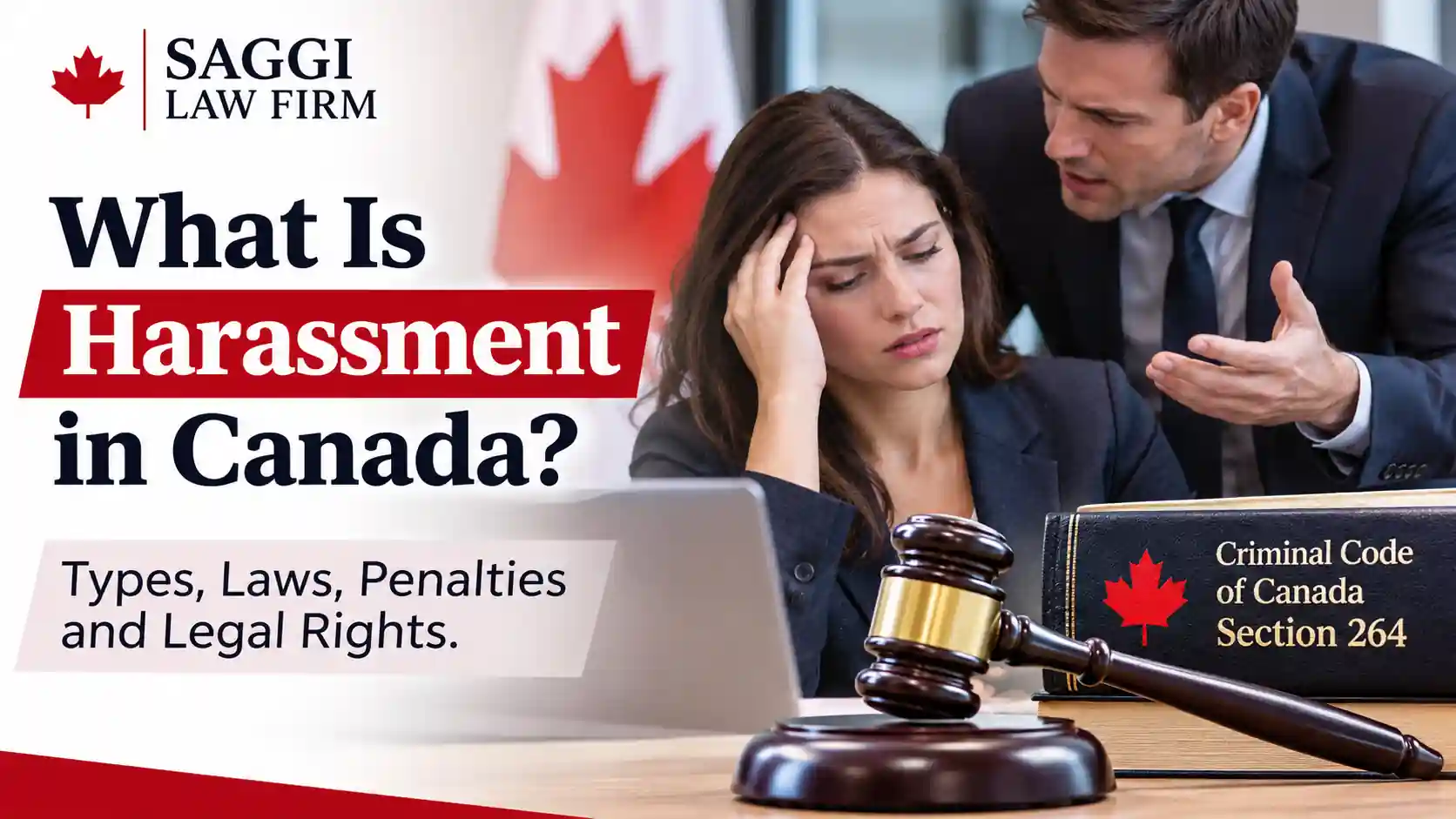
Criminal harassment is an offence under Section 264 of the Criminal Code of Canada. It addresses conduct that involves an intention to harass, knowledge that the conduct would harass someone, or recklessness about whether the person would be harassed, where the conduct could reasonably be expected to make the other person believe that their safety or someone else’s safety is threatened.
The law identifies several types of prohibited conduct, including repeatedly following someone, monitoring their location or activities, repeatedly communicating with them, watching places where they live or work, and engaging in threatening conduct.
The legal assessment considers the circumstances surrounding the behaviour, the accused person’s state of mind, and the potential impact on the complainant’s reasonable perception of safety.
Criminal Code of Canada Section 264
Section 264 is particularly relevant to stalking and repeated intimidation. It covers conduct carried out in person, through telecommunications, or by other means.
Importantly, the provision was amended in 2026 to expressly include monitoring another person’s location, movements, actions, or social interactions. This makes the current wording particularly relevant to modern forms of stalking and digital surveillance.
A single unpleasant conversation does not automatically establish criminal harassment. The prosecution must establish the legal elements of the offence beyond a reasonable doubt.
What Are the Different Types of Harassment?
Harassment can take several forms. Identifying the type of behaviour involved helps determine which legal protections or remedies may apply.
1. Workplace Harassment
Workplace harassment involves unwanted conduct directed towards an employee or another person in a professional environment. It may include repeated humiliation, intimidation, offensive remarks, workplace bullying, threats, or inappropriate conduct by colleagues, managers, or supervisors.
In federally regulated workplaces, the Canada Labour Code establishes requirements for preventing and addressing workplace harassment and violence. Provincial occupational health and safety legislation also provides workplace protections, although requirements differ across provinces and territories.
2. Sexual Harassment
Sexual harassment involves unwanted sexual comments, advances, requests, touching, gestures, or other conduct of a sexual nature.
Examples include inappropriate remarks about someone’s appearance, unwanted physical contact, sexually explicit messages, and requests for sexual favours connected to employment opportunities.
Depending on the circumstances, sexual harassment may also involve discrimination, workplace violations, or criminal conduct.
3. Online Harassment and Cyber Harassment
Online harassment occurs through digital communication platforms, including social media, messaging applications, email, and other internet-based services.
Examples include:
- Repeated threatening messages.
- Cyberbullying and online intimidation.
- Harassment on social media.
- Sending abusive or sexually inappropriate messages.
- Monitoring someone’s online activities.
- Using digital platforms to threaten or embarrass another person.
Repeated unwanted electronic communication may become relevant to a criminal harassment investigation when the legal requirements of Section 264 are satisfied.
4. Domestic Harassment
Domestic harassment involves unwanted, intimidating, or threatening behaviour within a family or intimate relationship. It may include repeated unwanted communication, stalking, threats, controlling behaviour, or intimidation following a relationship breakdown.
Some domestic harassment situations may involve criminal harassment, assault, threats, or other criminal offences, depending on the conduct.
5. Verbal and Psychological Harassment
Verbal harassment involves abusive language, insults, threats, humiliation, and repeated offensive comments.
Psychological or emotional harassment may involve intimidation, manipulation, persistent humiliation, isolation, or behaviour intended to cause emotional distress.
Not every form of emotional mistreatment is a criminal offence. Its legal significance depends on the circumstances and the applicable legislation.
6. Racial and Discriminatory Harassment
Racial harassment involves offensive or intimidating behaviour connected to a person’s race, colour, ethnic origin, or related characteristics.
Discriminatory harassment may involve unwanted conduct based on protected characteristics under applicable human rights legislation. These protections can apply in areas such as employment, housing, and services.
7. Physical Harassment and Intimidation
Physical harassment may involve unwanted physical contact, aggressive gestures, threatening movements, or conduct intended to frighten another person.
Where physical force or threats are involved, the situation may also raise issues under assault and other Criminal Code provisions.
What Is the Difference Between Harassment, Stalking and Bullying?
Although these terms are sometimes used interchangeably, they do not always have the same legal meaning.
Harassment is a broad term covering unwanted conduct that may be addressed through criminal, employment, human rights, or other legal processes.
Stalking generally involves repeated following, monitoring, watching, or contacting someone. In Canada, stalking behaviour may constitute criminal harassment under Section 264.
Bullying generally involves repeated aggressive, intimidating, or humiliating behaviour. Workplace bullying may fall under applicable workplace harassment legislation, depending on the circumstances.
Harassment vs Assault
Harassment and assault are different legal concepts. Harassment may involve repeated unwanted communication, stalking, monitoring, intimidation, or threatening behaviour. Assault generally involves the application or attempted application of force without consent, or certain threats or gestures involving the ability to apply force.
Some incidents may involve both harassment and assault, depending on what happened.
Read more about assault and its legal implications in Canada.
What Are the Penalties for Harassment in Canada?
The consequences depend on the type of harassment and the legislation involved.
Criminal Harassment Penalties
A person convicted of criminal harassment under Section 264 of the Criminal Code can face imprisonment.
The offence is punishable by:
- An indictable conviction carrying a maximum prison sentence of 10 years.
- A summary conviction, where the applicable sentencing provisions and circumstances determine the penalty.
The court considers factors such as the seriousness of the conduct, the circumstances of the offence, the accused person’s criminal history, and the impact on the victim.
Other Legal Consequences
Depending on the circumstances, harassment allegations may also lead to:
- Workplace disciplinary action.
- Employment-related complaints.
- Human rights proceedings.
- Court orders restricting contact.
- Peace bonds or other protective conditions where legally available.
- Civil legal claims where the facts and applicable law support them.
A complaint or accusation does not automatically mean that a person is guilty. Criminal responsibility must be determined through the applicable legal process.
How to Report Harassment in Canada
Individuals experiencing threatening or repeated unwanted behaviour may have several options for seeking assistance.
1. Contact the Police
If you believe your safety is threatened, contact local police. For immediate danger, call 911. Police can assess the situation, investigate potential criminal conduct, and determine whether charges may be appropriate.
2. Preserve Evidence of Harassment
Evidence can be important when reporting harassment or responding to an allegation. Relevant material may include:
- Text messages and emails.
- Call logs and communication records.
- Social media messages and screenshots.
- Photographs or video recordings.
- Witness statements.
- Records of repeated incidents, including dates and locations.
Avoid deleting potentially relevant communications or altering original records.
3. Submit a Workplace Harassment Complaint
Employees may report workplace harassment through their employer’s designated complaint process, human resources department, workplace committee, or applicable occupational health and safety authority.
The appropriate process depends on whether the workplace is federally or provincially regulated.
4. Seek Legal Advice
A lawyer can explain the applicable legislation, assess available evidence, identify possible legal remedies, and help protect your rights during an investigation or legal proceeding.
How to Prove Harassment in Canada
Proving harassment requires evidence relevant to the specific legal claim. The required elements differ between criminal harassment, workplace harassment, and human rights complaints.
For criminal harassment, the prosecution must prove the elements of Section 264 beyond a reasonable doubt.
Evidence may include repeated communications, threatening messages, surveillance records, witness testimony, police reports, and documentation showing the pattern and circumstances of the alleged conduct.
The context is important. A message or isolated interaction may have a different legal significance when considered alongside a wider pattern of behaviour.
What Are Your Legal Rights If You Are Accused of Harassment?
Being accused of harassment can have serious personal, professional, and legal consequences. However, an allegation is not proof of guilt.
An accused person has important legal rights, including the right to be presumed innocent, the right to remain silent in accordance with applicable law, and the right to legal representation.
Possible Defences Against Criminal Harassment Allegations
The appropriate defence depends on the facts and evidence. Legal issues may include:
- Whether the alleged conduct occurred.
- Whether the accused had the required intent, knowledge, or recklessness.
- Whether the conduct meets the legal definition of criminal harassment.
- Whether the complainant’s alleged fear or safety concerns satisfy the statutory requirements.
- Whether the evidence is reliable and admissible.
- Whether the conduct had lawful authority or another legally relevant justification.
A criminal defence lawyer can examine the evidence, identify weaknesses in the prosecution’s case, and determine the most appropriate legal strategy.
When Should You Contact a Harassment Lawyer in Canada?
You should consider obtaining legal advice if you are facing criminal harassment charges, have received a police request for an interview, are dealing with a harassment complaint, or believe someone is repeatedly threatening or monitoring you.
Early legal guidance can help you understand the applicable law, preserve important evidence, avoid mistakes during an investigation, and evaluate your available options.
Saggi Law Firm understands that criminal allegations can create significant stress and uncertainty. Whether you are seeking advice about harassment charges, need assistance understanding your legal rights, or require guidance on a related criminal matter, obtaining appropriate legal representation can make an important difference.
Frequently Asked Questions About Harassment in Canada
1. What is considered harassment in Canada?
Harassment can involve unwanted conduct such as repeated communication, stalking, threats, intimidation, sexual advances, or discriminatory behaviour. Whether it is legally actionable depends on the applicable legislation and circumstances.
2. Can you go to jail for harassment in Canada?
Yes. A conviction for criminal harassment under Section 264 can result in imprisonment for up to 10 years if prosecuted by indictment. Summary conviction penalties are governed by the applicable sentencing provisions.
3. Is one text message considered harassment?
One unwanted text message does not automatically constitute criminal harassment. The content, context, intention, and surrounding circumstances must be considered.
4. Is online harassment illegal in Canada?
Online conduct can constitute criminal harassment when it satisfies the requirements of Section 264. Other online behaviour may also violate applicable human rights, privacy, or other laws.
5. How do I report someone for harassment?
You can contact local police if the conduct involves threats, stalking, or concerns about safety. Workplace complaints can be reported through the appropriate employer or regulatory process.
6. What happens after a harassment complaint?
The process depends on the nature of the complaint. Police may investigate suspected criminal conduct, while employers and human rights bodies follow their respective complaint and investigation procedures.
7. Can someone be charged with harassment without physical contact?
Yes. Criminal harassment does not require physical contact. Repeated communication, monitoring, following, watching, and threatening conduct may fall within Section 264 when its legal requirements are met.
8. What should I do if I am falsely accused of harassment?
Avoid contacting the complainant in violation of any applicable court order or release condition, preserve relevant evidence, and seek advice from a criminal defence lawyer before responding to investigative questions.
Get Legal Guidance for Harassment-Related Matters
Harassment allegations should never be taken lightly. Whether you are dealing with criminal harassment, stalking, workplace harassment, online threats, or an accusation against you, understanding the law is essential to protecting your rights.
Saggi Law Firm can help you understand your legal position, assess the circumstances of your case, and explore appropriate legal options. Contact the firm to discuss your situation and obtain guidance on the next steps.