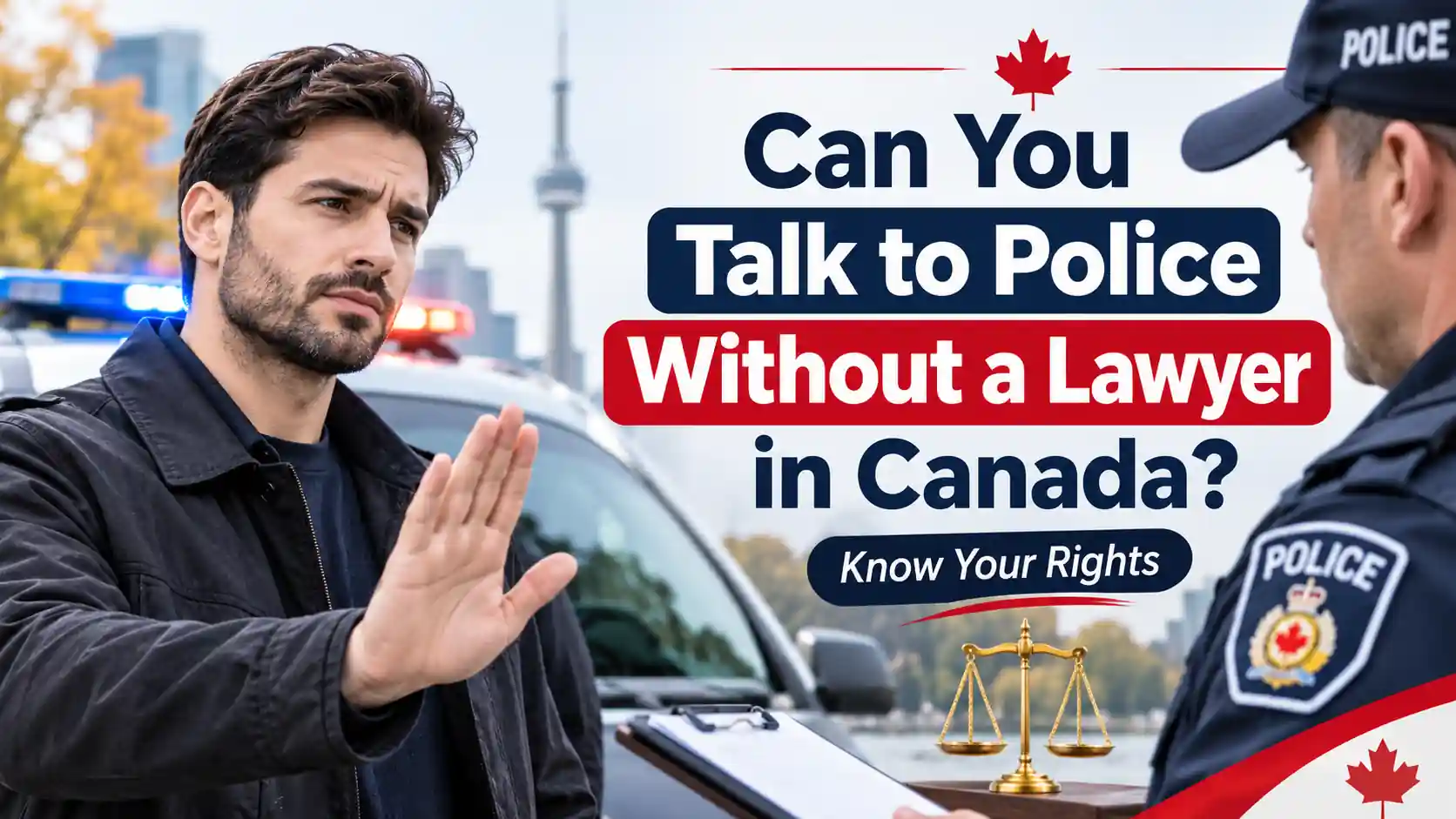
Can You Talk to Police Without a Lawyer in Canada? Know Your Rights
Being approached by police can be stressful, particularly when officers want to ask questions about a criminal investigation. You may wonder whether you must answer their questions, whether you can refuse a police interview, or whether speaking without legal representation could affect your case.
In Canada, individuals generally have the right to remain silent when questioned by police. However, the circumstances matter. Your rights may differ depending on whether you are a witness, a suspect, an accused person, or someone who has been arrested or detained.
Understanding the Canadian Charter of Rights and Freedoms can help you make informed decisions during police questioning. Before providing a statement or answering questions about a potential criminal offence, it is important to understand your legal position and the consequences of your decisions.
At Saggi Law Firm, we help individuals understand their rights and navigate criminal investigations. This guide explains what Canadian law says about speaking to police without a lawyer and when obtaining legal advice may protect your interests.
Can I Talk to Police Without a Lawyer in Canada?
Yes. You can voluntarily speak to police without a lawyer in Canada. There is generally no legal requirement to have a criminal defence lawyer present whenever you communicate with law enforcement.
However, being legally permitted to speak does not mean that doing so is always in your best interests.
Police officers may ask questions to establish facts, investigate an allegation, identify potential suspects, or obtain information that could support criminal charges. Even if you believe you are simply explaining your side of the story, your answers may become part of the investigation.
A voluntary police statement can potentially be used as evidence in court, depending on the circumstances and applicable rules of admissibility.
You should therefore consider obtaining legal advice before participating in a police interview, particularly if officers suspect you were involved in an offence.
Do You Have the Right to Remain Silent in Canada?
Yes. The right to remain silent is an important protection within Canadian criminal law.
Section 7 of the Canadian Charter of Rights and Freedoms protects life, liberty, and security of the person in accordance with the principles of fundamental justice. Canadian courts have recognized a related right to silence that protects individuals against being compelled to assist the state in building a criminal case against them.
This means that, in general, you do not have to answer police questions simply because an officer asks them.
Can You Refuse to Answer Police Questions?
In many situations, yes. If police approach you and ask questions about a criminal investigation, you can generally decline to provide answers.
You can calmly explain that you do not wish to answer questions without first speaking to a lawyer.
However, the right to remain silent does not eliminate every legal obligation. Certain laws require individuals to provide specific information or comply with lawful demands.
For example, drivers may have obligations during lawful traffic stops, including providing required identification and complying with certain demands under the Criminal Code. Other statutory identification requirements may also apply in particular circumstances.
Therefore, refusing an informal police interview is different from refusing a legally required demand.
What Does Section 10(b) of the Charter Say About Your Right to a Lawyer?
Section 10(b) of the Canadian Charter of Rights and Freedoms protects your right, upon arrest or detention, to retain and instruct counsel without delay and to be informed of that right.
This constitutional protection is particularly important when police want to question you about a suspected criminal offence.
When someone is arrested or detained, police generally have three important obligations:
- Inform the individual of their right to retain and instruct legal counsel without delay.
- Provide a reasonable opportunity to contact a lawyer if the individual wishes to exercise that right.
- Refrain from eliciting incriminating evidence until the individual has had a reasonable opportunity to consult counsel, subject to recognized exceptions.
What Is the Difference Between Arrest and Detention?
An arrest generally involves taking someone into police custody through physical restraint or words of arrest that the person submits to.
Detention is broader. It can occur when a person is legally restrained or when the circumstances of a police interaction would make a reasonable person believe they are not free to leave.
Not every conversation with police amounts to detention. An officer can approach someone, ask questions, and conduct an investigation without automatically triggering Section 10(b).
The Supreme Court of Canada addressed this distinction in R. v. Suberu, explaining when the right to counsel is triggered during a police interaction.
Can Police Question You After You Request a Lawyer?
Generally, police must hold off on questioning a detained person who has invoked their right to counsel until they have been given a reasonable opportunity to exercise that right.
However, the legal requirements depend on the circumstances, including urgency and safety considerations.
If you request legal representation, clearly communicate your decision. Do not assume that simply remaining quiet automatically tells police that you want to contact a lawyer.
Can Police Use Your Statement Against You?
Yes. Statements made voluntarily to police can potentially become evidence in a criminal proceeding.
A police statement may contain information that investigators use to:
- Establish a timeline of events.
- Identify other individuals involved in an incident.
- Compare your account with witness statements.
- Investigate inconsistencies in your explanation.
- Support or challenge allegations relating to criminal charges.
Even statements intended to explain your innocence can create complications if they contain inconsistencies or information that investigators interpret differently.
Are All Police Statements Admissible in Court?
No. Canadian law places important restrictions on the admissibility of statements made to people in authority.
The confessions rule generally requires the Crown to establish beyond a reasonable doubt that a statement made by an accused to a person in authority was voluntary before it can be admitted.
Courts may consider factors such as threats, promises, oppression, operating mind, and whether the accused understood their right to remain silent.
Section 24(2) of the Charter may also become relevant when evidence was obtained through a Charter violation. A court can exclude evidence if admitting it would bring the administration of justice into disrepute, applying the legal framework established in R. v. Grant.
A Charter violation does not automatically mean that every statement or piece of evidence will be excluded.
Can Police Interrogate You Without a Lawyer?
Police can conduct interviews and interrogations during criminal investigations. However, constitutional protections apply when the legal requirements for arrest or detention are met.
If you are detained and request legal counsel, police generally must provide a reasonable opportunity for you to consult a lawyer before attempting to obtain incriminating evidence.
Do You Have the Right to Have a Lawyer Present During a Police Interview?
Not necessarily.
In R. v. Sinclair, the Supreme Court of Canada clarified that Section 10(b) does not generally provide an automatic right to have a lawyer physically present throughout a police interrogation.
The primary constitutional protection is the opportunity to obtain legal advice before questioning.
A further consultation may be required if significant changes in circumstances alter the legal situation and make additional advice necessary.
This distinction is important because having the right to speak with a lawyer does not always mean that the lawyer must sit beside you during every police interview.
What Should You Do When Police Want to Question You?
If police contact you about a criminal investigation, remain calm and avoid unnecessary confrontation. You can protect your position by understanding the following practical steps.
1. Find Out Why Police Want to Speak With You
Ask whether you are being questioned as a witness, suspect, or accused person. You can also ask whether you are under arrest or detention and whether you are free to leave.
Police may not always disclose every detail of an investigation, but understanding your status is important.
2. Do Not Guess or Speculate
Avoid giving answers based on assumptions or incomplete memories. Incorrect information can create confusion and potentially affect the investigation.
You should not make statements simply because you feel pressured to provide an immediate explanation.
3. Request Legal Advice
If you believe you may be connected to a criminal offence, consider contacting a criminal defence lawyer before participating in a police interview.
If arrested or detained, clearly invoke your Section 10(b) right to counsel.
4. Avoid Signing Statements You Do Not Understand
Read any written statement or document carefully. Do not sign something simply because an officer asks you to do so.
You should understand what the document says and what legal consequences may follow.
5. Preserve Relevant Information
Do not destroy, alter, or conceal potentially relevant evidence. Preserve relevant documents, messages, and other records, and discuss them with your lawyer.
Can Police Question Witnesses Without a Lawyer?
Yes. Police can generally ask witnesses questions without providing them with a lawyer.
However, a witness is not automatically required to participate in every voluntary police interview.
The legal position may change if the witness becomes a suspect or is detained in connection with an investigation.
If your answers could potentially expose you to criminal liability, obtaining independent legal advice before providing a statement is particularly important.
What Happens If Police Violate Your Charter Rights?
If police violate your constitutional rights during questioning, your lawyer may be able to challenge the legality of the investigation or the admissibility of certain evidence.
Depending on the circumstances, possible legal arguments may involve:
- Section 7 protections against compelled self-incrimination.
- Section 10(a) rights to be informed promptly of the reasons for arrest or detention.
- Section 10(b) rights to retain and instruct counsel without delay.
- Section 24(2) applications to exclude evidence obtained through Charter violations.
- The voluntariness of statements made during police interrogation.
In R. v. Grant, the Supreme Court of Canada established an important framework for determining whether evidence obtained through a Charter breach should be excluded.
The outcome depends on the specific facts, the nature of the violation, and the applicable legal principles.
Why Speak to a Criminal Defence Lawyer Before a Police Interview?
A criminal investigation can have serious consequences, even before formal charges are laid.
An experienced criminal defence lawyer can review your circumstances, explain your constitutional rights, assess potential risks associated with providing a statement, and advise you on how to respond to police requests.
Legal advice can be especially important when:
- Police have contacted you about a suspected criminal offence.
- Investigators want you to attend a police station interview.
- You have been arrested or detained.
- You have already provided a statement and are concerned about its contents.
- Police have requested additional information or a second interview.
- You believe your Charter rights were violated.
At Saggi Law Firm, we understand that dealing with police investigations can be overwhelming. Our criminal defence services are focused on helping individuals understand their legal options and protecting their rights throughout the criminal justice process.
Speak With Saggi Law Firm About Your Police Questioning Rights
If police want to question you about a criminal investigation, do not assume that providing an explanation without legal advice is harmless.
Understanding your right to remain silent, your right to counsel, and the potential consequences of a voluntary statement can make an important difference in how you approach the situation.
Saggi Law Firm provides criminal defence legal services in Brampton and across Ontario. If you are facing police questioning, an investigation, or potential criminal charges, contact our office to discuss your circumstances and obtain legal guidance.
Protect your rights. Understand your options. Get legal advice before making important decisions about a police interview.