What Is Domestic Abuse?
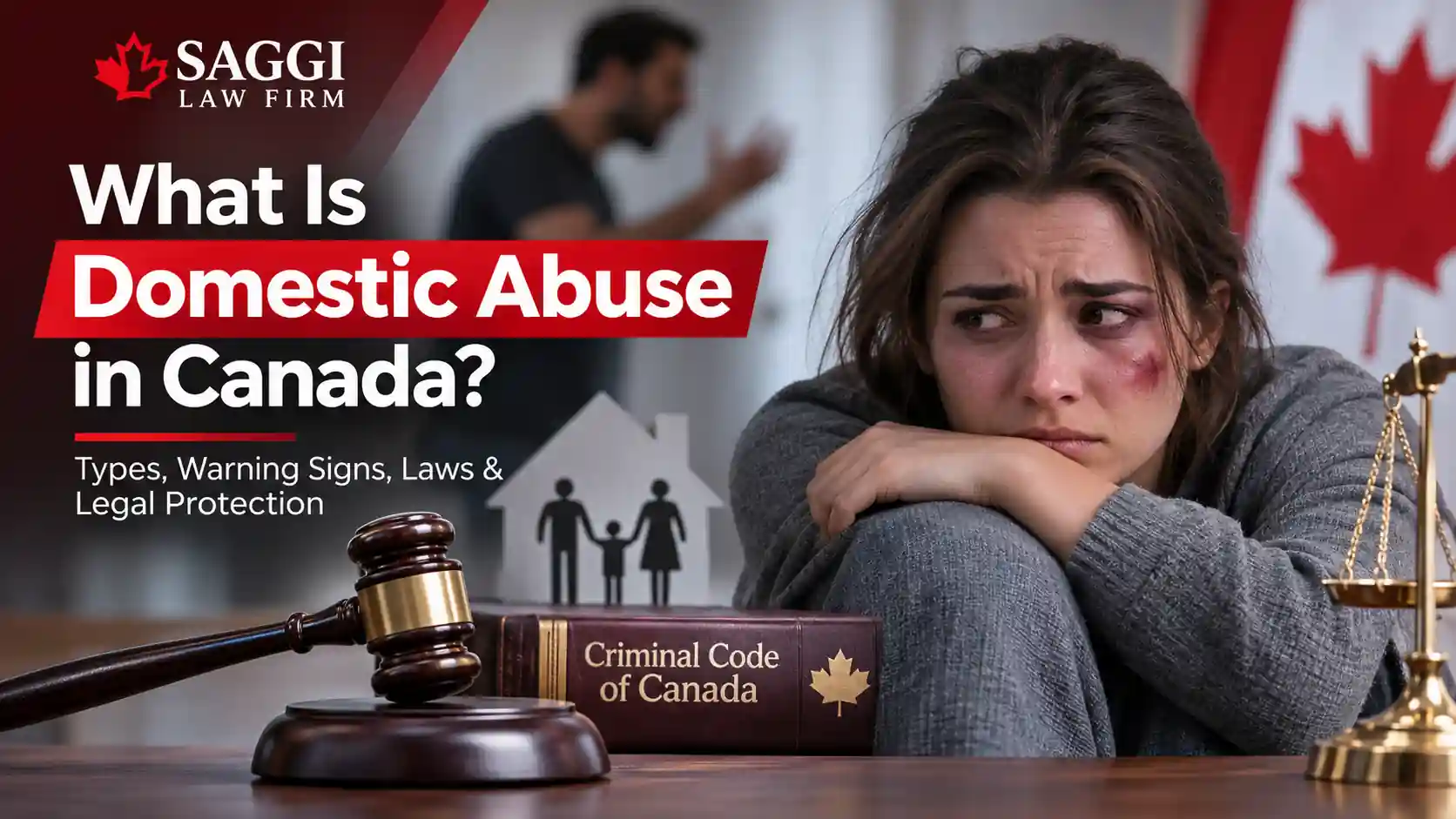
Domestic abuse is a pattern of behaviour in which one person uses violence, threats, intimidation, manipulation, or controlling behaviour to gain power over another person within an intimate, family, or domestic relationship. In Canada, domestic abuse can involve physical violence, emotional abuse, psychological abuse, sexual abuse, financial control, harassment, stalking, and coercive control. It does not always involve physical injuries; repeated threats, isolation, humiliation, and restrictions on personal freedom can also indicate an abusive relationship.
Domestic abuse can happen between married couples, common-law partners, dating partners, former partners, family members, and people living in the same household. It can affect women, men, children, older adults, and people in LGBTQ+ relationships.
Understanding what domestic abuse means is important because recognizing abusive behaviour early can help individuals seek protection, understand their legal rights, and make informed decisions about their safety. Canadian law provides different legal protections and criminal consequences depending on the behaviour involved.
What Does Domestic Abuse Mean in Canada?
Domestic abuse in Canada generally refers to abusive conduct within a domestic or family relationship. It is closely associated with intimate partner violence (IPV), spousal abuse, partner abuse, and family violence.
Although the terms domestic abuse and domestic violence are often used interchangeably, domestic abuse can describe a wider range of harmful behaviour, including non-physical actions designed to control or intimidate another person.
For example, a partner who regularly threatens someone, controls their finances, monitors their communications, prevents them from seeing family members, or uses intimidation to influence their decisions may be engaging in abusive behaviour.
Domestic Abuse vs. Domestic Violence
Domestic violence often emphasizes physical violence and threats, while domestic abuse can include physical, emotional, psychological, sexual, and financial mistreatment.
Both terms describe serious relationship-related harm, but the legal consequences depend on the specific conduct and applicable Canadian laws.
Domestic Abuse vs. Assault
Domestic abuse describes a broader pattern or context of harmful behaviour, whereas assault is a specific criminal offence under section 265 of the Criminal Code of Canada.
An incident of domestic violence may result in assault charges, but not every form of domestic abuse automatically constitutes a criminal offence.
Learn more about the legal definition and consequences of assault under Canadian criminal law.
Types of Domestic Abuse and Common Examples
Domestic abuse can take different forms. Recognizing these behaviours can help individuals identify unhealthy and potentially dangerous relationships.
1. Physical Abuse
Physical abuse involves intentionally using force or physical contact to hurt, intimidate, or control another person.
Common domestic abuse examples include:
Hitting, punching, kicking, or slapping.
Pushing, grabbing, or choking.
Throwing objects at someone.
Blocking someone from leaving a room.
Threatening physical injury.
Using weapons to intimidate a partner.
Physical abuse can cause visible injuries, but some incidents may leave no obvious physical marks.
2. Emotional and Psychological Abuse
Emotional abuse involves behaviour intended to damage someone’s confidence, emotional well-being, or sense of self-worth.
Psychological abuse may involve intimidation, manipulation, humiliation, threats, and controlling behaviour.
Examples include repeatedly insulting a partner, threatening to end a relationship to gain control, blaming someone for abusive conduct, and using gaslighting to make them question their memories or judgment.
3. Verbal Abuse
Verbal abuse involves using language to threaten, degrade, frighten, or humiliate another person.
It may include constant criticism, aggressive shouting, offensive language, threats, and repeated insults.
4. Sexual Abuse
Sexual abuse involves sexual activity or contact without voluntary consent. It may include sexual assault, forced sexual acts, unwanted touching, and reproductive coercion.
Being married or living with someone does not mean that a person automatically consents to sexual activity.
5. Financial and Economic Abuse
Financial abuse occurs when someone uses money or financial resources to control another person.
Examples include:
Preventing a partner from accessing bank accounts.
Taking their income without permission.
Restricting access to money.
Creating debts in another person’s name.
Preventing someone from working.
Controlling household spending to create dependence.
6. Coercive Control and Isolation
Coercive control involves a pattern of behaviour intended to dominate another person’s choices, movements, relationships, or independence.
It may include monitoring someone’s activities, restricting contact with friends and relatives, controlling daily decisions, intimidation, and repeated threats.
Isolation is particularly concerning because it can make it difficult for someone to seek assistance or leave an abusive relationship.
7. Digital Abuse and Stalking
Digital abuse, also called technology-facilitated abuse, involves using technology to monitor, threaten, harass, or control another person.
Examples include tracking someone’s location without consent, accessing private accounts, sending threatening messages, monitoring online activity, and sharing private information without permission.
Stalking and repeated harassment may also raise criminal law concerns.
Signs of Domestic Abuse: Warning Signs and Red Flags
Recognizing domestic abuse warning signs can be difficult because abusive behaviour may develop gradually. Some individuals may not realize they are experiencing abuse until controlling behaviour becomes more frequent or severe.
Common domestic abuse red flags include:
Feeling afraid of a partner’s reactions or behaviour.
Being constantly monitored or questioned.
Losing contact with friends and family.
Being threatened or humiliated regularly.
Having limited access to money or personal documents.
Experiencing repeated unwanted physical or sexual contact.
Being blamed for another person’s aggressive behaviour.
Having personal messages, calls, or location monitored.
Being prevented from making independent decisions.
Understanding the Domestic Abuse Cycle
Some abusive relationships follow a cycle of violence involving tension, an abusive incident, apologies or reconciliation, and a temporary period of calm.
However, not every abusive relationship follows this pattern. Apologies, gifts, and promises to change do not necessarily mean abusive behaviour has stopped.
Who Can Experience Domestic Abuse?
Domestic abuse is not limited to one gender, age group, or type of relationship.
Domestic Abuse Against Women and Men
Women and men can both experience domestic abuse. Women are disproportionately affected by certain forms of intimate partner violence, but men can also experience physical, emotional, sexual, and financial abuse.
Domestic Abuse in Different Relationships
Domestic abuse can occur in:
Marriage and spousal relationships.
Common-law relationships.
Dating relationships and former partnerships.
LGBTQ+ relationships.
Families involving parents, children, or other relatives.
Relationships involving older adults.
Elder abuse may involve neglect, financial exploitation, intimidation, or physical mistreatment.
How Domestic Abuse Affects Children
Children exposed to domestic violence may experience anxiety, emotional distress, behavioural changes, sleep difficulties, and problems at school. They can be affected even when the abuse is directed at another family member rather than at them.
The safety and well-being of children should be considered when seeking legal protection or making family-related decisions.
Domestic Abuse Laws in Canada
Domestic abuse laws in Canada involve federal criminal legislation and provincial or territorial laws dealing with family relationships, protection orders, and victim support.
There is no single general Criminal Code offence called domestic abuse or domestic violence. Instead, specific conduct may constitute offences under the Criminal Code of Canada.
Criminal Code Offences Related to Domestic Abuse
Depending on the circumstances, domestic abuse may involve:
Assault (section 265): Intentionally applying force without consent or attempting or threatening to apply force in circumstances covered by the law.
Sexual assault: Sexual contact without legally valid consent.
Uttering threats (section 264.1): Making specified threats to cause death or bodily harm, damage property, or harm an animal.
Criminal harassment (section 264): Engaging in prohibited harassing conduct that meets the statutory requirements.
Forcible confinement (section 279(2)): Unlawfully confining or imprisoning another person.
Mischief: Intentionally damaging property or interfering with its lawful use.
Breach of release conditions: Disobeying applicable court-ordered or release conditions.
The exact offence and potential penalties depend on the evidence, circumstances, and applicable Criminal Code provisions.
Department of Justice Canada+2
Is Coercive Control a Criminal Offence in Canada?
Canada’s Protecting Victims Act, 2026, received Royal Assent on June 18, 2026. It introduces a new Criminal Code offence concerning patterns of coercive or controlling conduct towards an intimate partner.
However, the new offence under section 264.01 is subject to delayed commencement. Under the Act’s coming-into-force provisions, it is scheduled to take effect on the second anniversary of Royal Assent, unless brought into force earlier by an order of the Governor in Council.
Therefore, as of November 2026, this new offence is not yet in force. Other conduct forming part of coercive control may already constitute existing criminal offences depending on the circumstances.
Department of Justice Canada+1
Domestic Abuse Legal Consequences and Penalties
A person accused of domestic abuse may face criminal charges depending on the alleged conduct.
For example, simple assault under section 266 can carry imprisonment of up to five years if prosecuted by indictment, or punishment on summary conviction. Assault involving a weapon or bodily harm under section 267 carries more serious potential penalties.
Department of Justice Canada+1
Other possible legal consequences include:
Criminal records following conviction.
Court-imposed probation conditions.
No-contact orders and bail conditions.
Restrictions on possessing firearms where legally applicable.
Peace bonds and other protective measures.
Family court proceedings concerning parenting arrangements and safety.
A charge is not the same as a conviction. Every accused person is entitled to the presumption of innocence and a fair legal process.
How to Report Domestic Abuse and Seek Legal Protection
Anyone experiencing domestic abuse should consider their immediate safety before taking further steps.
What to Do If You Are Experiencing Domestic Abuse
If you are in immediate danger, call 911. If possible, move to a safer location and contact someone you trust.
Other practical steps include:
Develop a safety plan with a trusted support person or domestic violence service.
Keep important identification documents and essential items accessible.
Preserve relevant messages, emails, photographs, and other evidence when safe.
Contact local victim services or a domestic violence shelter.
Seek legal advice about available protection and family law options.
If monitoring or digital abuse is a concern, consider using a safer device when seeking assistance.
How to Prove Domestic Abuse
Evidence may help establish what happened and whether a criminal offence or other legal issue exists.
Potential evidence includes:
Text messages and emails.
Photographs of injuries or property damage.
Medical records.
Witness statements.
Police reports and incident numbers.
Relevant recordings, where lawfully obtained.
A record of incidents, including dates and descriptions.
Not every case requires the same evidence. A person should not put themselves at risk to collect additional material.
What Happens After a Domestic Violence Police Report?
After someone reports domestic abuse in Canada, police may investigate, interview witnesses, collect evidence, and determine whether there are reasonable grounds for an arrest or further action.
If charges are laid, the accused may be released with conditions or held for a bail hearing. Conditions may include restrictions on contacting the complainant or attending a particular residence.
The prosecution is generally handled by the Crown, and a complainant cannot independently withdraw criminal charges once they have been laid.
Halton Regional Police Service+2
Legal Protection Available to Domestic Abuse Victims in Canada
Depending on the province or territory and the circumstances, individuals may have access to several legal protection options.
These can include:
Peace bonds: Court orders under the Criminal Code that may require someone to follow specific conditions when there are reasonable grounds to fear future harm.
Restraining orders: Civil or family court orders restricting contact or certain conduct.
Emergency protection orders: Available under specific provincial or territorial legislation.
No-contact orders: Conditions that can restrict communication with an alleged victim.
Bail conditions: Restrictions imposed when an accused person is released while criminal proceedings continue.
These measures are not interchangeable. Their availability, application procedures, and requirements vary by jurisdiction.
Ministère de la Justice+1
When Should You Contact a Domestic Abuse Lawyer in Canada?
Obtaining legal advice can be important when domestic abuse allegations involve criminal charges, police investigations, protection orders, or family disputes.
A Canadian criminal defence lawyer can help someone facing domestic assault charges understand the allegations, review available evidence, assess potential legal defences, and navigate the criminal justice process.
Legal advice may also help individuals understand their rights when dealing with allegations involving assault, sexual assault, uttering threats, criminal harassment, or other offences.
At Saggi Law Firm, we recognize the legal complexities surrounding assault allegations and criminal proceedings. If you are facing domestic assault allegations or need guidance concerning criminal charges, understanding your legal position early can help you make informed decisions.
Learn more about our criminal assault legal services and how legal representation can help you understand your options.
Frequently Asked Questions About Domestic Abuse in Canada
1. What is domestic abuse in Canada?
Domestic abuse refers to harmful behaviour within a domestic or family relationship, including physical violence, emotional manipulation, psychological abuse, sexual abuse, financial control, threats, and intimidation.
2. Can domestic abuse happen without physical violence?
Yes. Domestic abuse can involve emotional, psychological, verbal, financial, and digital abuse without physical violence. Repeated controlling behaviour and intimidation can also have serious consequences.
3. Is emotional abuse considered domestic abuse?
Yes. Emotional abuse can be a form of domestic abuse. Repeated humiliation, manipulation, threats, isolation, and gaslighting are examples of emotionally abusive behaviour.
4. Can men experience domestic abuse?
Yes. Men can experience domestic abuse from spouses, dating partners, former partners, and other family members. They may experience physical, emotional, sexual, psychological, and financial abuse.
5. Can domestic abuse happen in dating relationships?
Yes. Domestic abuse can occur in dating relationships, even when the individuals are not married or living together. Dating violence may involve threats, stalking, physical assault, sexual abuse, and controlling behaviour.
6. Can domestic abuse result in criminal charges?
Yes. Specific abusive conduct may result in charges under the Criminal Code of Canada, including assault, sexual assault, criminal harassment, uttering threats, and forcible confinement.
7. Can domestic abuse allegations affect child custody?
Yes. Evidence of family violence may be relevant to parenting arrangements and decisions about a child’s best interests under applicable family law. Courts consider the circumstances and the impact on the child’s safety and well-being.
8. How can someone get legal protection from an abusive partner?
Depending on the situation and jurisdiction, legal protection may involve peace bonds, restraining orders, emergency protection orders, no-contact conditions, or other court orders.
9. What happens when someone is charged with domestic assault in Canada?
The accused person may be arrested, released with conditions, or held for a bail hearing. The matter may proceed through criminal court, where the Crown must prove the charge beyond a reasonable doubt.
10. When should someone contact a Canadian domestic abuse lawyer?
Someone should consider contacting a lawyer when facing domestic assault charges, responding to allegations, dealing with a police investigation, or seeking advice about criminal proceedings and legal protection.
Conclusion
Domestic abuse in Canada involves more than physical violence. It can include emotional manipulation, psychological intimidation, sexual abuse, financial control, stalking, threats, and coercive behaviour. Recognizing the warning signs and understanding the relevant Canadian laws can help individuals make informed decisions about their safety and legal rights.
Whether someone is experiencing abuse or facing domestic assault allegations, obtaining appropriate legal guidance can make an important difference. Saggi Law Firm provides legal information and assistance concerning criminal law matters, including assault-related allegations. Understanding your legal options is an important first step towards protecting your rights.