Refusing a Breathalyzer in Ontario: Charges, Penalties, Licence Suspension and Legal Defences
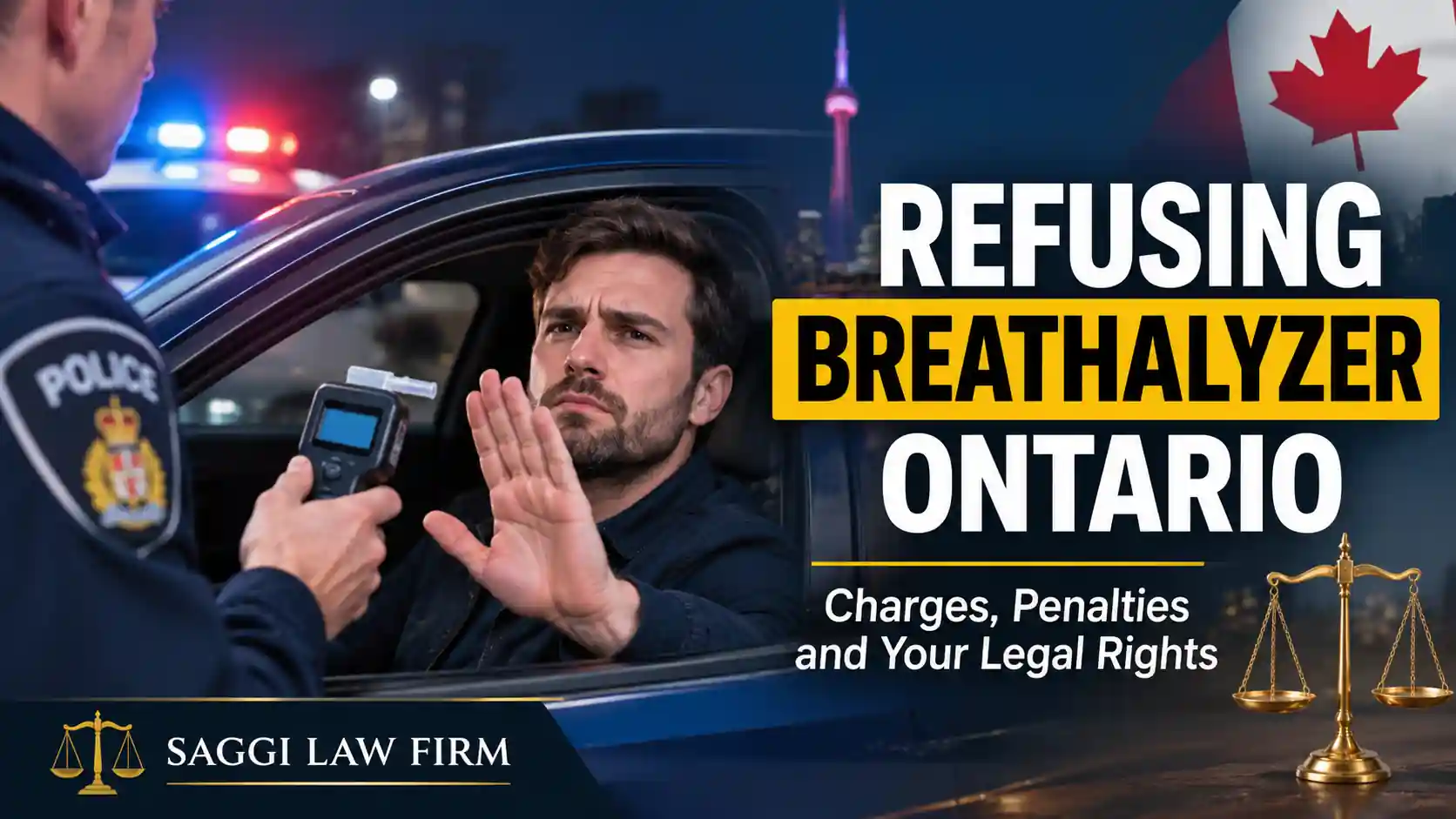
Refusing a breathalyzer in Ontario can lead to serious criminal and driving-related consequences, even if you have not been convicted of impaired driving. Under Canada’s Criminal Code, drivers can face a separate criminal charge for failing or refusing to provide a breath sample when legally required by police. A refusal may result in a criminal record, substantial fines, driving prohibitions, licence suspension and increased insurance costs.
However, not every refusal situation is identical. The circumstances surrounding the police demand, the driver’s ability to provide a sample and whether a reasonable excuse existed can all become important when defending a refusal charge. Understanding your legal rights and the applicable laws is essential if you have been arrested or charged.
Is Refusing a Breathalyzer a Criminal Offence in Ontario?
Yes. Refusing a breathalyzer can constitute a criminal offence under Section 320.15(1) of the Criminal Code of Canada. This provision makes it an offence to knowingly fail or refuse to comply with a lawful police demand under Section 320.27 or Section 320.28 without a reasonable excuse.
In practical terms, drivers cannot automatically avoid an impaired driving investigation by refusing to provide a breath sample. Police officers have legal authority to request breath samples in specific circumstances, including mandatory alcohol screening during a lawful traffic stop.
A breathalyzer refusal charge is separate from an impaired driving charge. This means a person may face prosecution for refusing to provide a breath sample even when police do not have a breath test result establishing that their blood alcohol concentration exceeded the legal limit.
What Is Section 320.15 of the Criminal Code?
Section 320.15 addresses failure or refusal to comply with a lawful demand for breath, blood or other required samples. The prosecution must establish the applicable legal elements, including that a valid demand was made, the accused knew about the demand and failed or refused to comply.
A driver may have a defence if the demand was unlawful or the circumstances establish a legally recognized reasonable excuse.
When Can Police Demand a Breathalyzer Test in Ontario?
Ontario police officers can demand breath samples under different provisions of the Criminal Code, depending on the circumstances of the investigation.
Section 320.27: Roadside Breath Testing
Section 320.27 allows police to demand a roadside breath sample using an approved screening device when the legal requirements are met.
Under mandatory alcohol screening provisions, an officer who is lawfully exercising their duties and has an approved screening device may demand an immediate breath sample from a person operating a motor vehicle.
This is commonly known as random roadside breath testing. Police do not necessarily need reasonable suspicion that a particular driver has consumed alcohol before making a mandatory alcohol screening demand.
However, the officer must still be acting within the legal authority provided by the legislation.
Section 320.28: Evidentiary Breath Testing
Section 320.28 applies when police have reasonable grounds to believe that a person operated a vehicle while impaired by alcohol or committed a specified alcohol-related offence.
Police may require additional breath samples for analysis using an approved instrument, such as an Intoxilyzer, operated by a qualified technician.
Depending on the circumstances, a blood sample demand may also be authorized when the legal requirements are satisfied, including where a physical condition makes providing a breath sample impossible or impracticable.
Refusing a Roadside Breath Test vs. an Evidentiary Breath Test
It is important to understand the difference between an approved screening device (ASD) and an evidentiary breath testing instrument.
An approved screening device is generally used during roadside screening to detect alcohol. An evidentiary breath test is conducted using an approved instrument to obtain evidence for an impaired driving investigation.
Both types of demands can carry legal obligations. Refusing roadside screening or failing to provide the required evidentiary breath samples may result in criminal charges under Section 320.15 if the applicable legal requirements are established.
Simply arguing that you were only being asked to perform a preliminary roadside test does not automatically provide a defence.
What Are the Consequences of Refusing a Breathalyzer in Ontario?
The consequences of refusing a breathalyzer can extend beyond the initial police interaction. Drivers may face immediate administrative penalties and separate criminal prosecution.
1. Immediate 90-Day Licence Suspension
Under Section 48.3 of Ontario’s Highway Traffic Act, police can impose an immediate 90-day administrative driver’s licence suspension when a driver fails or refuses to comply with a qualifying breath, blood or other sample demand.
This suspension takes effect immediately and is separate from the outcome of the criminal case.
2. Vehicle Impoundment
A refusal may also trigger vehicle-related consequences under Ontario’s impaired driving enforcement framework. Depending on the circumstances and applicable requirements, the vehicle may be subject to impoundment.
3. Criminal Record
A conviction under Section 320.15 can result in a criminal record. This may affect employment opportunities, professional licensing, international travel and other aspects of everyday life.
4. Increased Insurance Costs
A breathalyzer refusal conviction can make obtaining affordable auto insurance more difficult.
Insurance providers may classify convicted drivers as high-risk, resulting in higher premiums, restricted coverage options or difficulty finding an insurer.
5. Driving Prohibition and Ignition Interlock
A criminal conviction can result in a court-imposed driving prohibition. Depending on the circumstances and applicable provincial requirements, an ignition interlock program may also become relevant when seeking to reinstate driving privileges.
What Is the Fine for Refusing a Breathalyzer in Ontario?
The penalties for refusing a breathalyzer are established under Section 320.19 of the Criminal Code.
For a first offence under Section 320.15(1), the minimum fine is $2,000.
For repeat offences, the mandatory minimum punishments increase:
- First offence: Minimum fine of $2,000.
- Second offence: Minimum 30 days of imprisonment.
- Third or subsequent offence: Minimum 120 days of imprisonment.
A refusal offence prosecuted by indictment carries a maximum prison sentence of 10 years. If prosecuted by summary conviction, the maximum imprisonment is two years less a day, with a possible fine of up to $5,000.
The actual outcome depends on the prosecution method, the driver’s circumstances, previous convictions and other relevant legal factors.
Is Refusing a Breathalyzer Worse Than Failing One?
Refusing a breathalyzer is not necessarily a way to avoid impaired driving penalties. A refusal is a separate criminal offence with its own mandatory penalties.
A driver who provides a sample that establishes an unlawful blood alcohol concentration may face an impaired driving charge. A driver who refuses a lawful demand without a reasonable excuse may instead face a refusal charge.
Both situations can have serious consequences, and the appropriate legal response depends on the available evidence.
Can You Have a Reasonable Excuse for Refusing a Breathalyzer?
Section 320.15 recognizes a reasonable excuse as a potential defence. However, simply disagreeing with police, being nervous or believing that you have not consumed enough alcohol to be impaired does not automatically qualify.
Certain circumstances may require closer legal examination.
Medical Inability to Provide a Breath Sample
A genuine medical condition may prevent someone from providing an adequate breath sample. For example, a respiratory condition or another physical limitation could affect the person’s ability to comply.
The relevant medical evidence, circumstances of the demand and available alternatives may become important.
Insufficient Breath Sample
Sometimes a driver makes repeated attempts but cannot provide an adequate sample.
The distinction between an intentional refusal and a genuine inability to provide a sample can be important. Police communications, medical information and video recordings may help establish what actually happened.
Unclear or Unlawful Police Demand
The legality of the demand must also be examined. If police did not have the required legal authority or failed to satisfy applicable statutory requirements, this may become relevant to the defence.
A criminal defence lawyer can assess whether the circumstances provide a legally sustainable argument.
Can You Fight a Breathalyzer Refusal Charge in Ontario?
Yes. A breathalyzer refusal charge can be challenged depending on the facts, evidence and applicable law. Every case requires an individual assessment rather than relying on a general defence strategy.
Some important areas of investigation include:
Challenging the Lawfulness of the Police Demand
A lawyer can examine whether the officer had legal authority to make the demand under Section 320.27 or Section 320.28.
The distinction between reasonable suspicion and reasonable grounds is important because different demands require different legal thresholds.
Reviewing Police Evidence
The defence may examine:
- Police notes and officer observations.
- Body camera footage.
- Dashcam recordings.
- Police vehicle audio and video.
- Breathalyzer records and testing procedures.
- The wording and timing of the police demand.
- Evidence concerning the driver’s attempts to provide a sample.
This information may help determine whether the demand was properly made and whether the alleged refusal actually occurred.
Examining Charter Rights
The Canadian Charter of Rights and Freedoms protects individuals during police investigations and criminal proceedings.
Section 10(b) provides the right to retain and instruct counsel without delay upon detention or arrest, subject to the applicable legal framework.
In cases involving evidentiary breath demands, the timing of the right to counsel can be particularly important. The Supreme Court of Canada’s decisions and Ontario appellate case law help explain how these rights apply during impaired driving investigations.
For example, the Ontario Court of Appeal addressed important right-to-counsel issues in R. v. Khandakar, 2024 ONCA 620.
Establishing Reasonable Doubt
The Crown must prove the essential elements of the refusal offence beyond a reasonable doubt.
If the evidence raises a reasonable doubt about the validity of the demand, the alleged refusal or another essential element, the defence may challenge the prosecution’s case.
A reasonable excuse may also provide a defence where established on the applicable legal standard.
What Happens After a Breathalyzer Refusal Arrest?
The process following a refusal arrest can involve several stages.
First, police may arrest and investigate the driver, document the alleged refusal and lay a criminal charge. The driver may receive information about the charge and subsequent court proceedings.
Next, the case moves through the criminal court process. The defence can review disclosure materials, assess police evidence, identify potential Charter issues and determine whether negotiations or a trial are appropriate.
Depending on the outcome, the case may result in a withdrawal, acquittal, negotiated resolution or conviction.
The immediate administrative licence suspension is a separate matter. Eligible drivers may have grounds to challenge a 90-day suspension through the Licence Appeal Tribunal, including specific grounds involving medical inability to comply or mistaken identity.
How Saggi Law Firm Can Help With a Breathalyzer Refusal Charge
Facing a breathalyzer refusal charge in Ontario can create uncertainty about your licence, criminal record, employment and future driving privileges.
At Saggi Law Firm, we understand the importance of examining every detail of an impaired driving investigation. The circumstances surrounding a police breath demand, the driver’s response, available medical evidence and the conduct of investigating officers may all affect the legal strategy.
Our criminal defence approach focuses on reviewing disclosure, assessing the lawfulness of police demands, identifying potential Charter issues and examining whether the Crown can prove the allegations beyond a reasonable doubt.
Whether you are facing a first offence or a repeat refusal allegation, obtaining legal advice early can help you understand your options and the potential consequences.
If you have been charged with refusing to provide a breath sample in Ontario, contact Saggi Law Firm to discuss your circumstances and arrange a consultation with a criminal defence lawyer.
Frequently Asked Questions About Refusing a Breathalyzer in Ontario
1. Can police charge me for refusing a roadside breath test in Ontario?
Yes. Refusing a lawful roadside breath demand without a reasonable excuse can result in a criminal charge under Section 320.15(1) of the Criminal Code.
2. How long is your licence suspended for refusing a breathalyzer in Ontario?
Ontario generally imposes an immediate 90-day administrative driver’s licence suspension for qualifying refusals. This is separate from any criminal driving prohibition imposed following a conviction.
3. Can you go to jail for refusing a breathalyzer?
Yes. A first conviction carries a minimum fine of $2,000. A second offence carries a minimum 30-day jail sentence, while subsequent offences carry a minimum 120-day sentence.
4. Can a medical condition justify refusing a breathalyzer?
A genuine medical inability to provide a breath sample may support a reasonable excuse or an applicable administrative suspension appeal. Medical evidence and the specific circumstances must be examined.
5. Do you have the right to speak to a lawyer before a breathalyzer test?
The right to counsel depends on the type and circumstances of the police demand. Section 10(b) of the Charter is particularly relevant to detention and evidentiary breath testing. It does not generally create a right to delay an immediate roadside screening demand to consult a lawyer.
6. Does refusing a breathalyzer give you a criminal record?
A refusal charge does not automatically create a criminal record. However, a criminal conviction under Section 320.15 can result in a criminal record and other significant consequences.
7. Can a DUI lawyer help fight a breathalyzer refusal charge?
Yes. An impaired driving lawyer can review police evidence, examine the legality of the demand, investigate reasonable excuse arguments, assess Charter issues and challenge the Crown’s case where legally justified.