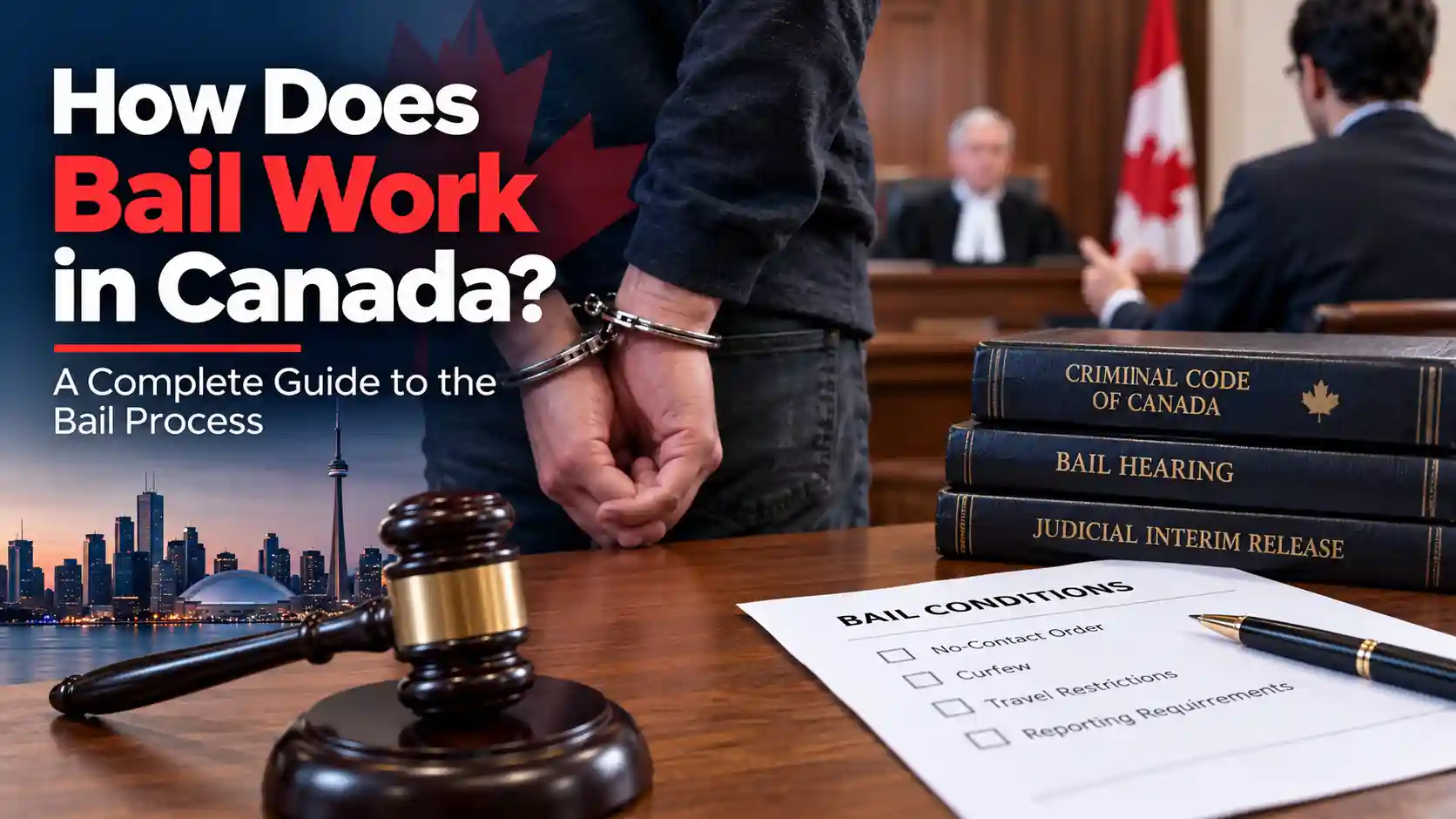
How Does Bail Work in Canada? A Complete Guide to the Bail Process
When someone is arrested and charged with a criminal offence in Canada, one of the first questions their family may ask is: How does bail work in Canada, and how can the accused person be released from custody? The Canadian bail system allows eligible accused individuals to seek release while their criminal case proceeds through the courts. However, release is not automatic, and the decision depends on the circumstances of the case, the applicable law, and the risks identified by the court.
Understanding the bail process in Canada can help accused individuals and their families prepare for a bail hearing, understand release conditions, and avoid mistakes that could affect their freedom. Saggi Law Firm helps individuals understand their legal options and navigate criminal proceedings with informed legal guidance.
What Is Bail in Canada?
Bail, formally associated with judicial interim release, is the process through which an accused person may be released from custody while awaiting further court proceedings. It does not mean the person has been found innocent or guilty. Under Canadian law, an accused person is generally presumed innocent until proven guilty.
The Canadian bail system is primarily governed by the Criminal Code of Canada. Section 515 establishes important rules for judicial interim release following an appearance before a justice, including the circumstances in which a person may be released or detained.
Depending on the circumstances, release may occur through police release or a court decision following a bail hearing.
Is Bail the Same as Being Found Not Guilty?
No. Bail only determines whether an accused person can remain out of custody while the criminal case continues. It does not end the criminal charges or determine guilt.
An accused person who receives bail must still attend court and comply with any applicable release conditions.
How Does the Bail Process Work in Canada?
The bail process depends on the nature of the alleged offence, the circumstances of the arrest, and whether the police or court considers detention necessary.
1. Arrest and Police Release
After an arrest, police may release an accused person without requiring a court bail hearing, where legally permitted. Depending on the situation, the person may receive an undertaking or another document setting out their obligations, including a requirement to attend court.
Police release may include conditions such as a no-contact order or restrictions on attending particular locations when authorized by law.
If police do not release the accused, the person will generally be brought before a justice for a bail hearing within the applicable legal timeframe.
2. The First Court Appearance
At the first appearance, the court addresses the accused person’s appearance and the next steps in the proceedings. If the accused remains in custody and the Crown seeks detention, a bail hearing may be required.
The accused may have a defence lawyer represent them. If they cannot afford private representation, they may be eligible for assistance through the applicable provincial legal aid program.
3. The Bail Hearing
A bail hearing, sometimes called a show cause hearing, is where the court considers whether the accused should be released or detained before trial.
The Crown prosecutor may present arguments supporting detention, while the defence lawyer can challenge those arguments and propose a suitable release plan.
The justice considers the relevant evidence, applicable legal rules, the alleged offence, the accused person’s circumstances, and any proposed bail conditions.
For a more detailed explanation of court procedures, evidence, and release options, read Saggi Law Firm’s guide to bail hearings and bail reviews.
4. The Court Makes a Release or Detention Decision
Following the hearing, the justice may order the accused released, potentially with conditions, or order continued detention if the legal requirements for detention are met.
Where release is granted, the accused must understand the release order and comply with every applicable condition.
What Does the Court Consider When Deciding Bail?
Under the Canadian bail framework, the court considers the legally relevant grounds for detention. These are commonly described as the primary, secondary, and tertiary grounds.
Primary Ground: Risk of Failing to Attend Court
The primary ground concerns whether detention is necessary to ensure the accused attends court as required.
The justice may consider the accused person’s history of attending court, community connections, previous failures to appear, and the proposed release plan.
Secondary Ground: Public Safety
The secondary ground concerns whether detention is necessary for public safety, including the safety of victims and witnesses.
The court may consider the circumstances of the alleged offence, any relevant criminal history, and whether proposed conditions can adequately address identified risks.
Tertiary Ground: Confidence in the Administration of Justice
The tertiary ground concerns whether detention is necessary to maintain public confidence in the administration of justice, considering the factors established by law.
These may include the apparent strength of the Crown’s case, the seriousness of the alleged offence, the circumstances surrounding it, and the potential sentence if the accused is convicted.
The court must apply the appropriate legal test rather than assuming that every person charged with a serious offence must remain in custody.
What Is Reverse Onus Bail in Canada?
In most bail proceedings, the Crown must justify detention under the applicable legal framework. However, certain circumstances create a reverse onus, meaning the accused must demonstrate why release is justified.
Reverse onus provisions can apply to particular offences or situations specified in the Criminal Code of Canada.
The applicable burden of proof and the evidence required depend on the circumstances. A defence lawyer can assess whether a reverse onus applies and help develop a release plan that addresses the court’s concerns.
What Are Bail Conditions in Canada?
A court may release an accused person unconditionally or impose conditions designed to address specific risks.
Common Types of Bail Conditions
Depending on the case, conditions may include:
- No-contact order: Prohibiting direct or indirect contact with a complainant or witness.
- Curfew: Requiring the accused to remain at an approved residence during specified hours.
- Residential conditions: Requiring the accused to live at a particular address.
- Reporting requirements: Requiring the accused to report to police or another designated authority.
- Weapons prohibition: Restricting possession of firearms or other weapons where ordered.
- Travel restrictions: Limiting travel or requiring the accused to remain within a specified area.
- Other restrictions: Conditions addressing identified concerns, where legally authorized and appropriate.
Not every accused person receives the same conditions. The court should consider the circumstances of the case and whether the conditions are necessary and legally appropriate.
What Happens After Bail Is Granted?
Once bail is granted, the accused must follow the release order, attend required court appearances, and comply with all conditions.
The accused should obtain and carefully review the written terms of release. If a condition is unclear, they should seek legal advice rather than assume it does not apply.
What Is a Surety in Canada?
A surety is a person who agrees to supervise an accused person and accept specified financial responsibility under a bail arrangement. A surety may be required when the court determines that this type of supervision is appropriate.
Who Qualifies as a Surety?
A suitable surety generally needs to demonstrate that they understand the responsibilities involved and can reasonably supervise the accused person.
The court may consider the proposed surety’s relationship with the accused, financial circumstances, ability to supervise, and willingness to report non-compliance when required.
A surety should not agree simply to help a friend or family member get released. They must understand the legal and practical consequences of their commitment.
Does the Accused Have to Live With the Surety?
Not necessarily. Whether an accused person must live with a surety depends on the release order and its conditions.
If the court requires the accused to reside at the surety’s address, that condition must be followed. If no such condition applies, living together is not automatically required simply because someone acts as a surety.
How Much Does Bail Cost in Canada?
There is no single bail amount that applies to every criminal case in Canada. The financial requirements depend on the circumstances and the form of release ordered.
Some accused individuals are released without providing money or a financial pledge. Others may be required to enter into a recognizance or provide a monetary pledge, sometimes with a surety.
Is Cash Bail Required in Canada?
Canada does not operate the same general cash-bail system commonly associated with the United States. Canadian law emphasizes release at the earliest reasonable opportunity and on the least onerous appropriate terms, subject to statutory exceptions and the circumstances of the case.
Financial requirements may still apply in certain cases, but paying a standard cash amount is not a universal requirement for release.
Is Bail Money Refundable in Canada?
The answer depends on the type of financial arrangement and whether the accused and surety comply with the applicable obligations.
A pledged amount is not necessarily money paid upfront. If a financial obligation is triggered by a breach, forfeiture proceedings may follow. Anyone considering a financial commitment should understand the exact terms before signing.
Can You Bail Yourself Out of Jail in Canada?
In some circumstances, an accused person can be released without a surety or another person providing financial support. In other cases, a surety or additional safeguards may be required.
The outcome depends on the applicable legal provisions, the alleged offence, the accused person’s circumstances, and the court’s assessment of the release plan.
For more information about release without another person’s assistance, see our guide: Can You Bail Yourself Out of Jail in Canada?.
How Long Does Bail Take in Canada?
There is no fixed timeline for every bail hearing. The time required can depend on court availability, the complexity of the case, the availability of a defence lawyer, disclosure issues, and whether a suitable surety or release plan is ready.
Canadian law establishes time requirements for bringing detained accused persons before a justice, but this does not guarantee that every hearing will conclude immediately or that release will be granted.
Families can help prepare by gathering relevant information about a proposed residence, potential surety, employment, community ties, and other details that may support a practical release plan.
What Happens If Bail Is Denied in Canada?
If the court orders detention, the accused generally remains in custody while the criminal case proceeds, unless a lawful basis for release is established later.
Depending on the circumstances, the defence may consider a bail review, reconsideration, or a new bail hearing where legally available.
A bail review is not an automatic second opportunity in every case. Specific procedural requirements and legal grounds must be satisfied.
A lawyer can assess the original decision, identify potential legal errors or material changes in circumstances, and explain the available options.
What Happens If You Breach Bail Conditions?
Breaching a release condition can have serious consequences. For example, contacting someone despite a no-contact order, failing to attend court, or violating another enforceable condition may result in arrest and additional criminal charges, depending on the circumstances.
A breach may also affect the accused person’s prospects of remaining on release.
Can Bail Conditions Be Changed?
In some circumstances, bail conditions can be varied through the appropriate legal process. The available procedure depends on the type of release order, the condition in question, and the applicable law.
An accused person should not change their residence, disregard a curfew, or contact a prohibited person simply because they believe the condition is unreasonable. They should obtain legal advice and seek a lawful variation before acting contrary to the order.
How Does Bail Work in Ontario?
Ontario follows the federal Criminal Code of Canada, while provincial court procedures and legal aid arrangements affect how cases are handled locally.
The Ontario Court of Justice conducts many criminal proceedings, including bail hearings. The Superior Court of Justice also has jurisdiction in criminal matters, including certain bail-related proceedings and reviews where authorized by law.
For eligible individuals, Legal Aid Ontario may provide access to criminal legal assistance, subject to its financial and other eligibility requirements.
Because bail decisions depend on the individual facts and applicable legal rules, advice from a Canadian criminal defence lawyer can help an accused person understand the process, prepare a realistic release plan, and address potential conditions.
Speak With Saggi Law Firm About Bail in Canada
A bail hearing can have an immediate impact on an accused person’s freedom, family responsibilities, employment, and ability to prepare a defence. Understanding the law and presenting an appropriate release plan can be important steps in navigating this process.
Saggi Law Firm provides information and legal services relating to criminal proceedings, including bail hearings and bail reviews. If you or a family member is facing criminal charges, seeking advice from a qualified criminal defence lawyer can help clarify the available options and applicable deadlines.
Contact Saggi Law Firm to discuss your circumstances, understand the bail process, and learn what legal steps may be available in your case.
This article provides general legal information, not legal advice. Bail outcomes depend on the facts, applicable legislation, and judicial discretion. Consult a qualified lawyer about your specific circumstances.