★★★★★Mischief Lawyer · Criminal Defence

Saggi Law Firm — Criminal Defence

Mischief Lawyer in Toronto | Defence for Mischief Charges

Facing a mischief charge can create serious concerns about your reputation, employment, finances, and future. Under Canadian criminal law, mischief can involve property damage, interference with property, or interference with another person's lawful use of property. Saggi Law Firm provides focused criminal defence for individuals charged with mischief in Toronto and throughout Ontario.

A mischief allegation does not automatically mean a conviction. The circumstances, evidence, intent, and legal elements of the alleged offence must be carefully examined.

Practicing Since2013
Availability24/7
ConsultationFree
A cinematic nighttime legal scene showing a rain-streaked Toronto city street through a window, with a judge’s gavel, criminal case files, and scales of justice in the foreground. The dark navy tones and warm antique-gold lighting create a serious atmosphere representing the legal consequences of a mischief charge and the need for criminal defence.

Understanding the Offence

What Mischief Means Under Canadian Law

Under section 430 of the Criminal Code of Canada, mischief is a criminal offence that can involve several different forms of conduct. The provision covers wilfully destroying or damaging property, rendering property dangerous, useless, inoperative, or ineffective, and obstructing, interrupting, or interfering with the lawful use, enjoyment, or operation of property. It can also apply when a person interferes with another person's lawful use, enjoyment, or operation of property. Department of Justice Canada

Canadian law also recognizes specific forms of mischief involving computer data. Depending on the circumstances, a mischief case can therefore involve physical property damage, interference with property, or conduct affecting digital information. The potential consequences vary according to the nature of the property, the circumstances alleged, the value involved, and whether other provisions of the criminal code apply. Department of Justice Canada

A cinematic legal office scene featuring case documents, photographs of damaged property, justice scales, law books, and the Toronto skyline, representing the legal meaning of mischief under Canadian law.

Mischief Allegations

What a Mischief Allegation Can Involve

A mischief charge does not necessarily require a person to have completely destroyed property. An allegation may involve damaging a vehicle, breaking a window, damaging a building, interfering with equipment, or making property unusable or ineffective. The Crown may also allege that someone intentionally interfered with another person's lawful use or enjoyment of property. Department of Justice Canada

The circumstances can range from relatively limited property damage to allegations involving substantial financial losses or interference with important property or systems. Section 430 also establishes different punishment provisions, including specific provisions where the property value exceeds $5,000 or where the alleged mischief creates actual danger to life. Department of Justice Canada

Defence Approach

Examining Intent and the Alleged Conduct

Section 430 generally describes mischief in terms of conduct done wilfully. The circumstances surrounding an incident may therefore be important when assessing what actually happened and what the evidence establishes about the accused's actions. A criminal lawyer can examine whether the prosecution can prove the required elements of the alleged criminal offence. Department of Justice Canada

Questioning the Evidence of Property Damage

Photographs, repair estimates, surveillance recordings, witness statements, digital records, and other evidence may be used to establish alleged damage property claims. The defence can scrutinize how the evidence was obtained, what it actually demonstrates, and whether it reliably connects the accused to the alleged damage or interference.

Exploring Alternative Explanations

The surrounding circumstances can sometimes provide an alternative explanation for an incident. Issues involving ownership, permission, lawful use, mistaken identity, disputed events, or the interpretation of surveillance footage may be relevant depending on the facts. A criminal defence lawyer can assess these issues and determine which matters require further investigation or challenge.

Saggi Law Firm office in Brampton, Ontario
★Est. 2013 · Brampton, ON

“A direct 24/7 line, personal attention, and a strategy built around your case — not a template.”

— Mandeep Saggi

Building the Defence

Building an Effective Defence Strategy

An effective defence strategy begins with understanding exactly what has been alleged and what the Crown must prove. The defence should be based on the evidence and the particular circumstances of the accused rather than assumptions about the allegation.

  • Evidence Review — whether the available evidence actually establishes the accused's involvement in the alleged mischief.
  • Legal Elements — whether the prosecution has evidence capable of proving each required element of the offence under section 430.
  • Timeline Analysis — whether the timing of events supports or conflicts with the allegation made against the accused.
  • Resolution Options — whether the circumstances create opportunities for an appropriate resolution based on the evidence, applicable law, and individual circumstances.

Meet the Lawyer

Meet the Lawyer

Your legal matter deserves personal attention from a qualified legal professional. Mandeep Saggi represents clients through Saggi Law Firm in serious criminal matters and provides focused criminal defence representation.

Mandeep Saggi, Criminal Defence Lawyer at Saggi Law Firm in Brampton, serving Toronto and the GTA
★★★★★ Top-Rated in Brampton

Barrister & Solicitor

Mandeep Saggi

Criminal Defence Lawyer

Strategy. Advocacy. Experience.

“Since 2013, Mandeep Saggi has built a reputation as a criminal defence lawyer in Brampton who vigorously fights for his clients' rights.”

He has successfully defended clients against criminal cases in the Ontario Court of Justice and the Superior Court of Justice, and makes daily appearances at the Brampton Courthouse.

Mandeep has been involved in high-profile criminal cases and represents clients in matters ranging from smaller-scale to complex criminal charges. Known for speedy responses, he keeps a direct line available 24/7.

§

Called to the Ontario Bar

Law Society of Ontario — 2013

§

Bachelor of Laws (LL.B Hons.)

University of Leicester, UK — 2009

§

Bachelor of Arts (B.A.)

York University — 2007

§

Articling

Toronto criminal law firm

§

Languages

English, Portuguese, Spanish, Punjabi, Hindi, Urdu

★Rated in the top 3 by Three Best Rated® — Best Criminal Defence Lawyers in Brampton

Protect Your Rights

Protect Your Rights in a Mischief Case

Being charged with mischief can be stressful, particularly when the allegation involves a workplace, business, residence, vehicle, public property, or another person's belongings. Obtaining legal advice early can help you understand the allegation, the applicable law, and the procedural steps that may follow.

Our criminal defence lawyer can assist with matters such as:

  • Reviewing the mischief charge and disclosure
  • Assessing allegations involving property damage
  • Examining surveillance footage and photographs
  • Reviewing witness statements and identification evidence
  • Assessing the alleged value of damaged property
  • Explaining potential consequences of a criminal record
  • Preparing for court appearances and procedural steps
  • Assessing possible defence issues under section 430
  • Discussing available resolution options
  • Representing clients facing a mischief conviction or prosecution

After You Are Charged

What Happens After You Are Charged?

After a person is charged with mischief, the criminal process can involve court appearances, disclosure, discussions between counsel, and potentially further proceedings depending on how the matter is resolved. The exact process can vary according to the circumstances, the classification of the allegation, the available evidence, and the decisions made during the case.

The accused should understand that being charged is not the same as being convicted. The prosecution must establish the applicable elements of the alleged offence through the criminal justice process. A lawyer can review the disclosure, identify relevant legal and factual issues, and explain what the next procedural steps may involve.

Why Early Legal Representation Matters

Seeking legal representation early can give you an opportunity to understand the allegation before making important decisions about your case. Early review may also help identify evidence that needs to be preserved, questions that require investigation, and issues that could affect the direction of the proceedings.

For someone facing a criminal charge in Toronto or elsewhere in Ontario, early advice can also help reduce uncertainty about court procedures and potential legal options. Your lawyer can explain the allegation in the context of the Criminal Code, review the available information, and help you make informed decisions throughout the process.

Why Early Legal Representation Matters

Long-Term Consequences

A mischief conviction may have consequences beyond the immediate court proceeding. Depending on the circumstances and outcome, a criminal record can affect employment opportunities, travel, professional considerations, and other areas of life. The significance of those consequences can vary substantially from one individual to another.

The potential consequences also depend on the specific offence, circumstances, resolution, and sentence. For that reason, it is important to consider both the immediate legal issue and the longer-term implications when responding to a mischief allegation.

Individual Defence Strategy

No two mischief allegations are necessarily identical. A case involving alleged damage to a vehicle may raise different factual and evidentiary questions from a case involving interference with business property, computer data, or another person's lawful use of property.

An individualized defence strategy considers the allegations, disclosure, witnesses, physical or digital evidence, applicable provisions of the Criminal Code of Canada, and your circumstances. The objective is to ensure that legal decisions are based on the actual case rather than assumptions.

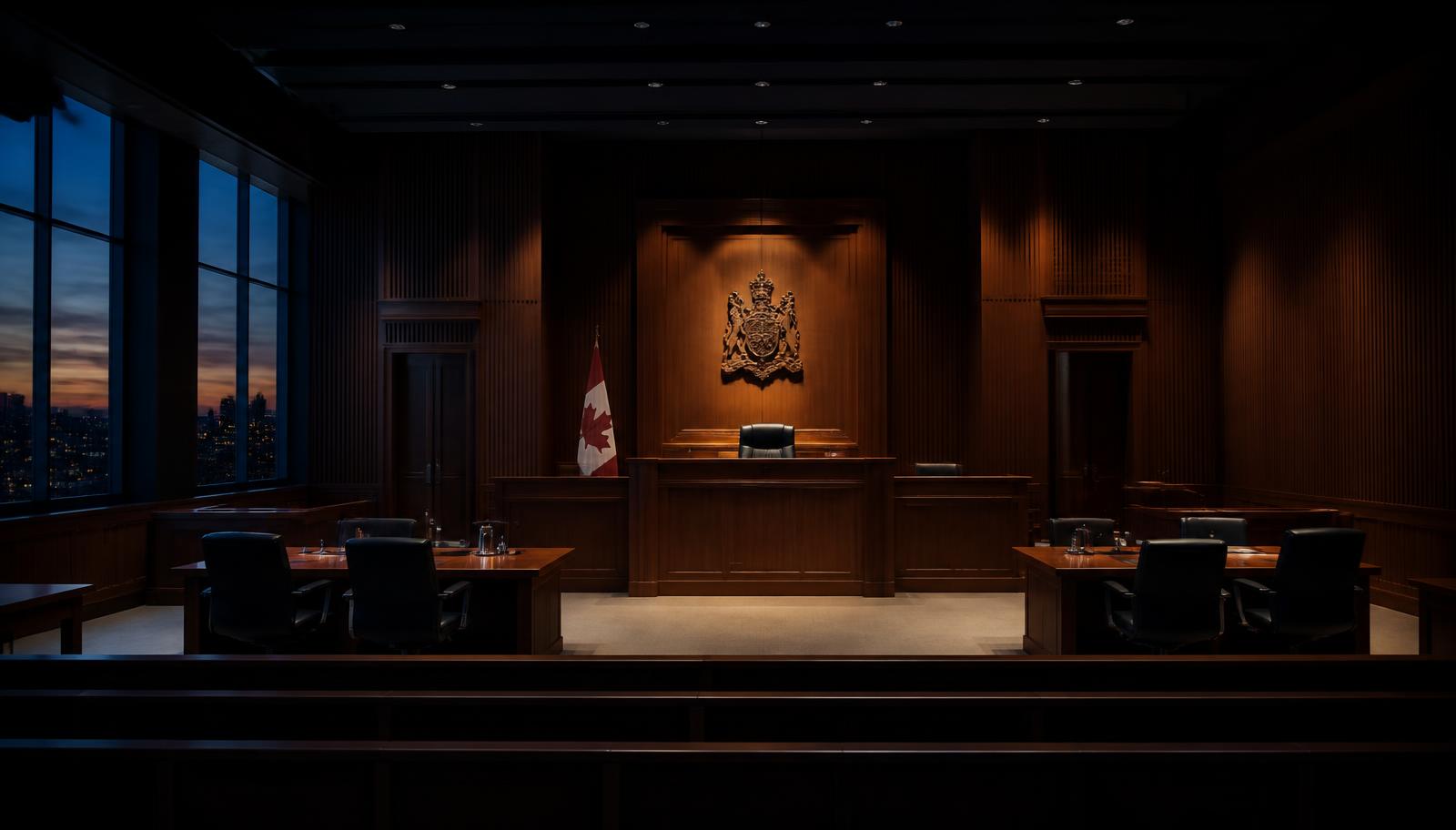
Empty Canadian courtroom where criminal trials and bail hearings take place

Criminal Justice Process

Understanding the Criminal Justice Process

The criminal justice process can begin with an investigation and a decision by police to lay a charge. Once a person is accused, the matter can proceed through court appearances and disclosure, where the defence reviews information relevant to the prosecution's case. The precise procedure depends on the circumstances and type of proceeding.

During the case, the prosecution and defence may address evidentiary, procedural, and legal issues. Depending on the circumstances, the matter may resolve without a trial or proceed through additional stages. A criminal defence lawyer can explain what each stage means and what decisions may need to be made.

For a person facing a mischief charge, understanding the process is particularly important because section 430 contains several different forms of mischief and different punishment provisions. For example, the Criminal Code provides separate treatment for certain property valued above $5,000 and for mischief causing actual danger to life. Department of Justice Canada

Frequently Asked Questions

Frequently Asked Questions About Mischief Charges

Below are answers to common questions about mischief charges in Canada. The legal position can depend on the facts and evidence in each individual case.

What is mischief under Canadian law?

Mischief is an offence under section 430 of the Criminal Code. It can include wilfully damaging or destroying property, making property dangerous or unusable, or interfering with its lawful use, enjoyment, or operation. The section also addresses certain forms of computer-data mischief. Department of Justice Canada

Is mischief a criminal offence in Ontario?

Yes. Mischief is a criminal offence under the federal Criminal Code of Canada, which applies throughout Ontario. The seriousness of the allegation depends on factors such as the conduct alleged, the property involved, its value, and other circumstances. Different punishment provisions apply to different forms of mischief under section 430. Department of Justice Canada

Can I be charged with mischief for damaging property?

Yes. Section 430 expressly includes wilfully destroying or damaging property within the definition of mischief. However, whether the prosecution can establish the offence depends on the evidence and the legal elements that must be proven. The surrounding circumstances, identity evidence, intent, and nature of the alleged damage can all be relevant. Department of Justice Canada

What happens if the alleged damage is worth more than $5,000?

Section 430(3) specifically addresses mischief involving property that is a testamentary instrument or property whose value exceeds $5,000. Where that provision applies, the Criminal Code establishes an indictable offence carrying a maximum term of ten years, or an offence punishable on summary conviction. Department of Justice Canada

Can mischief involve interference without property damage?

Yes. Section 430 is broader than physical property damage. It can include wilfully obstructing, interrupting, or interfering with the lawful use, enjoyment, or operation of property or with another person's lawful use, enjoyment, or operation of property. The specific facts determine whether the statutory requirements are met. Department of Justice Canada

Can mischief involve computer data?

Yes. Section 430(1.1) specifically addresses mischief involving computer data, including wilfully destroying or altering data, rendering it meaningless or ineffective, or interfering with its lawful use. It also covers certain conduct that denies access to computer data to a person entitled to access it. Department of Justice Canada

Can a mischief charge lead to a criminal record?

A criminal record can result from a conviction, although the precise consequences depend on how the case is resolved and the applicable circumstances. A charge by itself is not a conviction. If you are facing a mischief allegation, a lawyer can explain the potential implications of different outcomes based on the facts of your case.

Why should I speak with a mischief lawyer?

A mischief lawyer can review the allegation, disclosure, evidence, and applicable provisions of the Criminal Code. Legal advice can help you understand the process and the issues that may arise in your case. Because every allegation has different facts, individualized advice is important before making significant decisions about how to respond.


Visit Our Office

Saggi Law Firm — Brampton, ON

Located at Springdale Village Centre in Brampton. Available 24/7 for urgent legal matters — call, WhatsApp, or drop by the office.

Contact Us

Speak With Saggi Law Firm About Your Mischief Case

A mischief charge can raise important legal questions about alleged property damage, interference, identification, intent, evidence, and potential consequences. Whether the allegation involves a private dispute, commercial property, a vehicle, public property, or another situation, the details of the incident can significantly affect the legal analysis.

Saggi Law Firm provides criminal defence representation for individuals dealing with mischief allegations in Toronto and Ontario. If you have been charged with mischief, our team can review the circumstances, explain the applicable law, and help you understand the available legal steps based on the evidence and your individual situation.

Contact Saggi Law Firm to discuss your mischief case with a criminal defence lawyer.

+1 647-983-6720